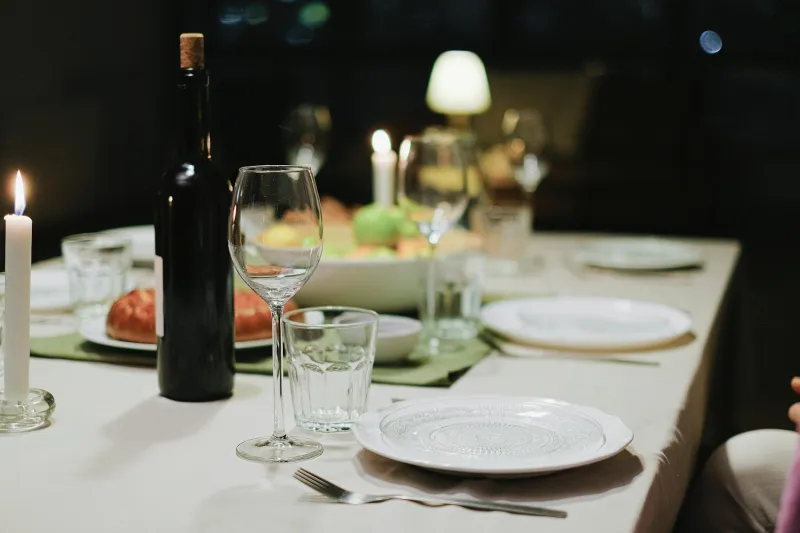
The Theatre of Intimate Strangers
There exists no more peculiarly British form of social masochism than the dinner party. Unlike our continental neighbours, who seem to approach home entertaining with the casual confidence of people who actually enjoy each other's company, we have transformed the simple act of feeding friends into an elaborate performance of cultural competence, moral virtue, and carefully calibrated aspiration.
The dinner party is dead, we're told, killed by Netflix and takeaway apps and the general atomisation of modern life. Yet walk through any middle-class neighbourhood on a Friday evening and you'll witness the soft glow of strategically dimmed lighting, the careful arrangement of mismatched vintage crockery, and the unmistakable anxiety of hosts frantically googling whether tahini is suitable for someone who's 'mostly plant-based but occasionally eats fish.'
From Fondue Sets to Sharing Boards
The British dinner party has always been a mirror to our social anxieties, but the reflection has grown increasingly complex. Where once we worried about whether our prawn cocktail was sophisticated enough, we now navigate a labyrinthine landscape of dietary restrictions, ethical considerations, and Instagram-worthy presentation standards that would have left our mothers reaching for the cooking sherry before the guests arrived.
The fondue set of the 1970s—that optimistic symbol of continental sophistication—has given way to the sharing board, that careful arrangement of artisanal products that signals both abundance and restraint, creativity and purchasing power. We've traded the anxiety of cooking something impressive for the anxiety of curating something authentic.
The New Rules of Engagement
Post-pandemic dinner parties operate under an entirely new set of unspoken protocols. The perfect Spotify playlist has replaced the perfect wine selection as the ultimate marker of taste. Hosts spend hours crafting the ideal sonic backdrop—not too obvious, not too obscure, nothing that might spark unwanted political associations or suggest you're trying too hard to be cool.
Meanwhile, the guest list itself has become an exercise in social engineering. Who can be trusted to engage meaningfully with Sarah's new partner? Which combination of personalities will generate the right balance of stimulating conversation without veering into the sort of heated debate that makes everyone check their phones? The modern dinner party host operates like a diplomatic attaché, managing not just dietary requirements but emotional ones.
The Paradox of Performed Intimacy
What's most revealing about our contemporary dinner party culture is how it exposes the peculiar British relationship with intimacy itself. We invite people we half-know into our most private spaces, then spend weeks beforehand ensuring those spaces perform the correct version of ourselves. The bathroom gets a strategic candle, the bookshelf receives a careful edit, the kitchen surfaces are cleared of all evidence of actual daily life.
This isn't mere social climbing—it's something more complex and perhaps more poignant. In an age where genuine community has been replaced by algorithmic connection, the dinner party represents a desperate attempt to create meaningful bonds through the medium of shared consumption. We're not just serving food; we're serving ourselves, carefully plated and garnished with our best intentions.
The Guilt of Good Intentions
Perhaps most tellingly, the modern British dinner party is suffused with a particular kind of middle-class guilt. We know we should be supporting local producers, reducing food waste, accommodating everyone's needs, and somehow making it all look effortless. The very act of hosting has become a performance of virtue, where every choice—from the source of your olive oil to the recyclability of your napkins—carries moral weight.
This transformation reflects broader changes in how we understand hospitality itself. What was once a simple expression of generosity has become a complex negotiation of values, aesthetics, and social positioning. We've professionalised the amateur, turning the kitchen table into a stage where our cultural credentials are perpetually on trial.
The Enduring Appeal of Artificial Intimacy
Yet despite all this anxiety—or perhaps because of it—the dinner party endures. In a society increasingly characterised by digital interaction and transactional relationships, there remains something irreplaceably human about gathering around a table, sharing food, and attempting conversation that goes beyond the weather.
The fact that we continue to put ourselves through this elaborate ritual of social performance suggests something profound about British loneliness. We may not know how to be genuinely intimate with one another, but we haven't given up trying. The dinner party, for all its neuroses and pretensions, represents our stubborn refusal to accept that meaningful connection is impossible in modern life.
In the end, perhaps the anxiety itself is the point. The careful preparation, the social choreography, the post-mortem analysis of who said what to whom—all of this represents a kind of secular prayer, a ritualistic attempt to transform strangers into friends through the simple magic of shared time and space. The British dinner party may be a performance, but it's a performance of hope.