The Chlorine Divide
On a grey Tuesday morning in South London, the queue at Tooting Bec Lido stretches beyond the Victorian entrance gates. Among the shivering hopefuls clutching keep-cups and wearing equipment that costs more than many monthly gym memberships, the transformation of Britain's outdoor swimming culture becomes starkly apparent. What was once the domain of hardy pensioners and local families has morphed into something altogether more complex—a wellness movement that speaks fluent middle-class aspiration whilst claiming the mantle of authentic community experience.
The statistics paint a compelling picture. Historic lidos across the country, from Saltdean to Penzance, have witnessed unprecedented restoration campaigns funded by lottery grants and crowdfunding appeals. Wild swimming groups have proliferated on social media, their membership rolls swelling with converts seeking what one might generously term 'authentic experiences' in an increasingly digital age. Yet the question remains: who exactly is this swimming renaissance serving, and at what cost to the communities these facilities were originally designed to support?
The Instagram Aesthetic of Authenticity
Scroll through any wild swimming hashtag and the pattern emerges with depressing predictability. Artfully composed shots of mist-shrouded tarns, carefully curated changing room selfies, and endless testimonials about 'connection' and 'grounding' dominate feeds where the swimmers themselves appear uniformly young, affluent, and overwhelmingly white. The accompanying kit—from Patagonia wetsuits to those ubiquitous Dryrobe changing robes—represents an investment that would have been unthinkable to the original users of Britain's municipal swimming facilities.
This commodification of outdoor swimming extends beyond mere equipment fetishism. Swimming coaches now offer 'wild swimming experiences' at premium rates, whilst boutique hotels market themselves around proximity to 'authentic' swimming holes. The language of wellness has colonised what was once simply exercise, transforming a straightforward activity into a lifestyle statement replete with spiritual overtones and environmental virtue signalling.
Victorian Values, Modern Prices
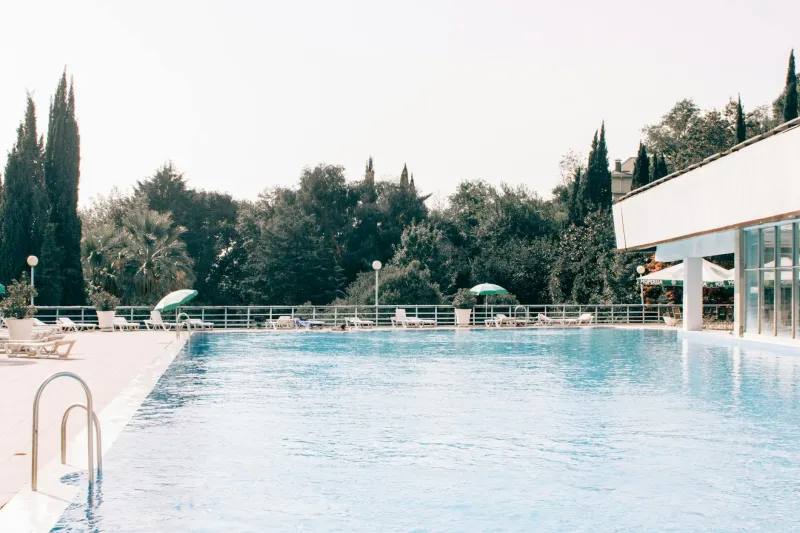
The irony runs deeper when one considers the origins of Britain's lido culture. These magnificent facilities were conceived as democratic spaces—places where working families could access clean water, fresh air, and recreational swimming regardless of economic circumstance. The grand Victorian and Art Deco pools that dot our urban landscape were explicitly designed to serve local communities, funded by progressive councils who understood swimming as a public good rather than a luxury commodity.
Today's restoration campaigns, whilst undoubtedly well-intentioned, have fundamentally altered this equation. Season tickets at London's premier lidos now cost upwards of £200, effectively pricing out the very demographics these facilities were built to serve. Meanwhile, the gentrification of surrounding areas has pushed working-class families further from these newly restored amenities, creating a curious situation where public facilities become increasingly exclusive through economic pressure rather than formal barriers.
The Wellness Industrial Complex
The transformation of outdoor swimming into a wellness practice represents perhaps the most troubling aspect of this cultural shift. Where once swimming was simply swimming—exercise, recreation, or escape from cramped living conditions—it now arrives laden with therapeutic claims and lifestyle promises that feel suspiciously convenient for middle-class anxieties about authenticity and purpose.
The cold water swimming movement, in particular, has embraced a pseudo-scientific discourse around hormesis, endorphins, and mental health benefits that, whilst not entirely without merit, often serves to justify what amounts to recreational masochism for those with sufficient leisure time to pursue it. The suggestion that regular cold water immersion represents some form of return to natural living conveniently ignores the privilege inherent in choosing discomfort as a lifestyle option.
Community or Performance?
Perhaps most concerning is how the swimming revival's emphasis on community often functions as performance rather than genuine social connection. The regular swimmers at Britain's premier lidos form tight-knit groups, certainly, but these communities increasingly resemble exclusive clubs rather than inclusive public spaces. The shared experience of cold water creates bonds, undoubtedly, but when that experience becomes accessible primarily to those with significant disposable income and flexible schedules, the community being built is necessarily narrow.
This exclusivity extends to the cultural capital required to navigate outdoor swimming's unwritten rules and social hierarchies. Knowledge of tides, water temperatures, and seasonal patterns becomes a form of cultural currency, whilst the 'correct' equipment and swimming technique serve as markers of insider status. What emerges is less a democratic recreation than a middle-class hobby with particularly stringent entry requirements.
Reclaiming the Waters
None of this is to suggest that outdoor swimming lacks genuine benefits or that its current popularity is entirely manufactured. The physical and mental health advantages of regular swimming are well-documented, and the connection to landscape and season that outdoor swimming provides offers something genuinely valuable in our increasingly mediated lives.
The challenge lies in ensuring that this renaissance serves more than aspirational lifestyle goals. True revival of Britain's swimming culture would prioritise accessibility over aesthetics, community building over social media presence, and public benefit over private wellness. It would recognise that the most authentic swimming experience might be the one that doesn't require documentation or expensive equipment—simply the democratic pleasure of clean water, open to all.
Until then, Britain's lido revival remains a beautiful metaphor for our broader cultural moment: the transformation of public goods into private experiences, community spaces into lifestyle venues, and simple pleasures into complex performances of authenticity. The water may be the same temperature it always was, but the social climate surrounding it has changed beyond recognition.