The Confessional Conversion
In the Victorian terraces of South London, something approaching religious fervour is taking hold. Not in the local churches — those have largely been converted into flats — but in the homes themselves, where exposed brick has become the new stained glass and reclaimed timber the modern equivalent of religious iconography.
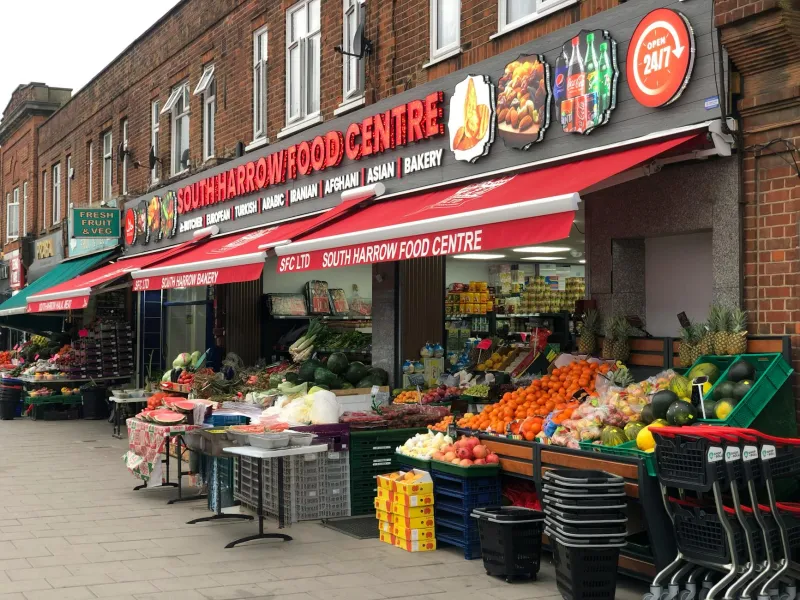
 Photo: South London, via frugalfrolicker.com
Walk through Dulwich, Clapham, or Hackney on any weekend morning and you'll witness the sacred rituals of contemporary British life: couples in matching workwear discussing the moral implications of knocking through to the kitchen, the careful choreography of choosing between Farrow & Ball's "Elephant's Breath" and "Mouse's Back," the quasi-spiritual experience of discovering original floorboards beneath decades of carpet.
This is not mere home improvement. This is autobiography written in aggregate and MDF.
The Immobility Crisis
The current obsession with renovation springs from a uniquely British predicament: we are a nation of homeowners who cannot move. Stamp duty, mortgage rates, and house prices have created a generation economically imprisoned in properties they can afford to own but not to leave.
Unable to express our changing circumstances through relocation, we have turned inward, transforming our fixed addresses into fluid statements of identity. The kitchen extension becomes the life change we cannot afford. The loft conversion represents the family expansion that house prices have made impossible. We are renovating our way through life stages we can no longer navigate geographically.
Instagram as Interior Designer
Social media has transformed home renovation from private necessity into public performance. Every decision must be photographable, every choice Instagram-worthy. The result is a curious homogenisation disguised as personalisation — thousands of identical "unique" kitchen islands, countless "original" exposed brick walls, an epidemic of "bespoke" fitted wardrobes that look suspiciously similar across postcodes.
The renovation Instagram account has become a peculiarly British form of autobiography — a way of narrating our lives through paint colours and kitchen tiles. Each post represents not just aesthetic choice but moral positioning: the reclaimed materials signal environmental consciousness, the local craftsman supports community values, the expensive fixtures demonstrate refined taste and financial success.
The Moral Marketplace
Modern British renovation has developed its own complex moral economy. Certain choices carry ethical weight: reclaimed materials are virtuous, new purchases slightly shameful. Local craftsmen are morally superior to large contractors. Period features must be "respected," modern additions must be "sympathetic."
This morality extends to spending patterns. The middle-class renovator faces constant ethical calculations: Is it acceptable to spend £15,000 on a kitchen when foodbanks exist? Does choosing expensive fixtures make one complicit in gentrification? Can sustainable materials justify extravagant costs?
These questions reveal renovation culture's deeper function — it has become a way of processing guilt about privilege, transforming consumption into virtue through careful curation and moral positioning.
The Therapy of Transformation
Perhaps most tellingly, renovation has assumed many of the functions previously served by therapy or religion. The process of transformation — stripping wallpaper, knocking down walls, "opening up" spaces — carries obvious psychological metaphors. Homeowners speak of "breathing new life" into rooms, of "unleashing potential," of "finding the house's true character."
The language is therapeutic, the process cathartic. Bad relationships are exorcised through bathroom renovations. Career changes are processed through kitchen extensions. Midlife crises are worked through in converted lofts.
The Craftsman as Confessor
The army of builders, plasterers, and kitchen fitters working in British homes have inadvertently become secular priests, listening to homeowners' anxieties about money, marriage, and meaning while installing underfloor heating and bespoke storage solutions.
These relationships often become surprisingly intimate — the builder who witnesses family arguments over tile choices, the decorator who hears confessions about overspending, the kitchen designer who becomes confidant during marital disputes about island placement.
The Gentrification Paradox
Britain's renovation obsession exists in uncomfortable tension with concerns about gentrification and community displacement. The same exposed brick walls and sash window restoration that represent personal authenticity contribute to neighbourhood transformation that prices out long-term residents.
This creates a peculiar form of cognitive dissonance. Renovators simultaneously celebrate "original features" and "local character" while participating in processes that fundamentally alter both. They preserve Victorian architectural details while transforming the social fabric that originally created them.
The Endless Project
What's most revealing about British renovation culture is its essentially unfinishable nature. Each completed project reveals new possibilities, new inadequacies, new opportunities for improvement. The renovated kitchen leads to bathroom dissatisfaction. The extended loft highlights the tired bedrooms below.
This endless cycle serves a psychological function — it provides ongoing purpose and identity in lives that might otherwise feel static. Unable to move house, change career, or radically alter circumstances, we can at least change our surroundings.
The Heritage Trap
Britain's renovation obsession is complicated by our relationship with architectural heritage. Every alteration must negotiate between preservation and modernisation, between respect for the past and accommodation of contemporary life. This creates its own form of cultural anxiety — the fear of making historically inappropriate choices, of being judged by future owners, of failing to be proper custodians of architectural legacy.
The result is often paralysis disguised as perfectionism — months spent researching "period appropriate" door handles, endless consultation with conservation officers, the careful documentation of every original feature before any alteration.
The Community of Consumption
Renovation has created new forms of social connection — WhatsApp groups sharing tradesman recommendations, neighbourhood Facebook pages debating planning applications, the informal networks that spring up around shared building projects.
Yet these communities are fundamentally transactional, bound together by consumption rather than deeper social ties. They represent a commodified version of community — connection through shared purchasing decisions rather than shared values or experiences.
In transforming our homes into statements of identity, we have perhaps revealed something uncomfortable about contemporary British life: our increasing reliance on consumption to provide meaning, community, and purpose that previous generations found through work, religion, or genuine social connection.
The exposed brick wall may look authentic, but the culture that created it is anything but.