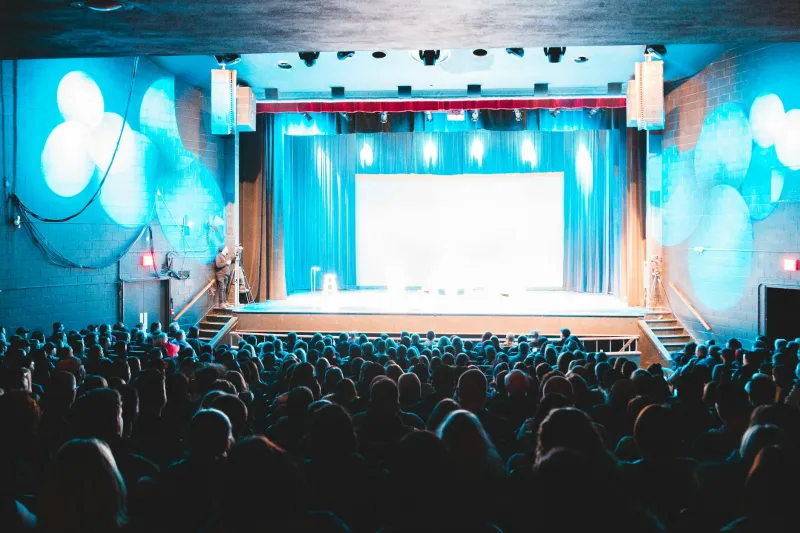
The Glow in the Dark
The first rule of theatre, unwritten but universally understood until recently, was simple: once the lights dim, you disappear into the collective darkness. Yet increasingly, British playhouses flicker with the ghostly illumination of mobile screens — audience members checking messages, photographing programmes, or simply unable to resist the dopamine hit of digital stimulation for two uninterrupted hours.
Actress Helen Morrison, currently starring in a West End revival, describes the phenomenon with weary resignation. "You develop a kind of peripheral vision for the blue glow. It's like performing with a constellation of tiny televisions scattered throughout the audience. It fundamentally changes the energy in the room."
This technological intrusion represents more than mere rudeness; it signals a profound shift in how we conceive of shared cultural experiences. The theatre audience was once a temporary community, bound together by the ancient contract of collective attention. That contract is quietly dissolving, replaced by the assumption that individual experience trumps communal ritual.
The Sweet Spot of Disruption
Perhaps more mystifying than the phone problem is the apparent inability of contemporary audiences to unwrap confectionery without creating maximum acoustic disruption. The rustle of cellophane has become the unofficial soundtrack to British theatre, reaching crescendos during the most intimate moments of performance.
Usher supervisor Patricia Wells has witnessed this phenomenon from the front lines for over two decades. "It's as if people have forgotten that live performance is different from watching television at home. They bring snacks, they talk to each other, they treat the theatre like their sitting room."
 Photo: Patricia Wells, via rarebookcellar.cdn.bibliopolis.com
The parallel she draws is illuminating. As domestic entertainment has become increasingly sophisticated and personalised, the special nature of live performance has perhaps lost some of its mystique. Why observe different behavioural standards for an experience that, to some, differs only marginally from streaming content on a larger screen?
The Interval Exodus
More troubling still is the growing trend of mid-performance departures. Not emergency exits, but casual wandering — audience members leaving their seats during scenes to visit the bar, use facilities, or simply stretch their legs. This behaviour would have been unthinkable a generation ago, yet it's becoming sufficiently common that performers now factor these disruptions into their technique.
Director Michael Thornton has adapted his staging accordingly. "You learn to work around the movement in the audience. It's part of the job now. But something is lost when the audience becomes transient rather than committed to the complete experience."
This casual relationship with performance time reflects broader cultural shifts towards convenience and personalisation. If streaming services allow us to pause, rewind, and consume content at our own pace, why should live theatre operate under different rules?
The Democratic Dilemma
Yet criticism of audience behaviour risks falling into elitist territory. The diversification of theatre audiences — younger, more diverse, less bound by traditional middle-class conventions — has undoubtedly enriched British theatre. The question becomes whether improved behaviour can be encouraged without excluding those who haven't inherited the unspoken rules of theatrical engagement.
Sociologist Dr Rachel Green studies audience behaviour across cultural institutions. "There's a tension between accessibility and tradition. Many of the conventions we consider 'proper' theatre etiquette developed within very specific class contexts. Expecting universal adherence to these norms can function as a barrier to participation."
This perspective complicates simple narratives about declining standards. Perhaps what we're witnessing isn't cultural deterioration but cultural democratisation — the inevitable friction that occurs when institutions rooted in particular social contexts encounter broader, more diverse audiences.
The Performers' Perspective
For those on stage, however, the impact feels less theoretical. Veteran actor James Robertson describes the challenge of maintaining connection with increasingly distracted audiences. "Theatre is fundamentally about shared energy. When that energy becomes fragmented — when you're competing with phones and conversations and people wandering about — the magic becomes much harder to achieve."
 Photo: James Robertson, via thecinemaholic.com
Younger performers, raised in the digital age themselves, often demonstrate more adaptability. "I try to see it as part of the contemporary performance landscape," explains recent drama school graduate Emma Clarke. "If the audience is different, perhaps the theatre needs to evolve too."
Towards a New Contract
The solution likely lies not in nostalgic appeals to bygone standards but in explicit renegotiation of the social contract between performers and audiences. Some venues now include behaviour guidelines in programmes, while others experiment with phone-free performances or interactive formats that acknowledge contemporary attention patterns.
The most successful approaches seem to emphasise the unique value proposition of live performance rather than simply demanding compliance with traditional norms. When audiences understand what they might lose through distraction — the subtle interplay between performer and spectator, the collective intake of breath at a perfectly timed pause — they often choose engagement over convenience.
British theatre has survived far greater challenges than restless audiences. The current moment offers an opportunity to rediscover what makes live performance irreplaceable whilst remaining accessible to those discovering it for the first time. The curtain hasn't fallen on theatrical etiquette — it's simply awaiting its next act.