The Shop That Remembered Your Name: How Independent Retail Became Britain's Most Unlikely Cultural Revival
The Bell Above the Door
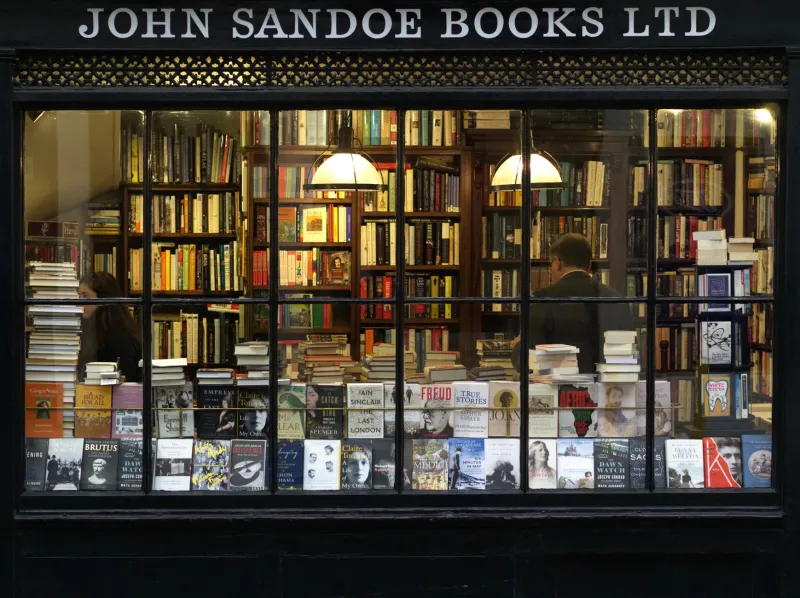
The bell above the door of a small shop is one of Britain's most undervalued sounds. It announces arrival without fanfare, signals presence without surveillance, and belongs to a register of daily life that the warehouse dispatch centre cannot approximate regardless of how efficiently it manages its logistics. It is, in its modest way, a sound that says: someone knows you are here.
That sound is, improbably, getting louder. After decades of prophecy — confident, data-supported, largely accurate prophecy — about the terminal decline of the independent high street, something unexpected has occurred. The independents are coming back. Not everywhere, not without difficulty, and not in the form they previously took. But they are coming back, and they are doing so with a cultural authority that their corporate competitors, for all their efficiencies, have found impossible to manufacture.
What the Algorithm Cannot Stock
To understand the revival, one must first understand what was lost — and lost so gradually that many people did not notice until they found themselves standing in a retail park, surrounded by the same twelve shops that exist in every retail park in Britain, experiencing a dissatisfaction they could not quite name.
What was lost was expertise freely given. The record shop owner who spent twenty minutes persuading you that the B-side was the real achievement. The independent bookseller who remembered that you had enjoyed a particular novel three years ago and had kept something aside accordingly. The hardware merchant who knew, without being asked, that the damp patch on your kitchen wall required a specific product that no search engine would have surfaced without seventeen minutes of increasingly frustrated research.
This is not nostalgia speaking, though nostalgia is certainly present in the conversation. It is a recognition that certain forms of knowledge are relational — they exist in the space between two people, are sharpened by repeated encounter, and cannot be reduced to a recommendation engine without losing the quality that made them valuable.
The Theatre of the Browse
There is also, it must be acknowledged, the matter of pleasure. Shopping, when it is done well, in a space designed with some care by someone who loves what they sell, is one of the more reliably enjoyable minor experiences available to the urban Briton. The browse — unhurried, unstructured, governed by curiosity rather than the fulfilment of a pre-existing need — is an activity that online retail has not so much improved as abolished.
The resurgence of vintage and secondhand shops across British cities illustrates this particularly well. In Manchester's Northern Quarter, in Bristol's Stokes Croft, in the backstreets of Edinburgh's Newington, independent retailers dealing in clothing, furniture, books, and records have not merely survived the e-commerce era but expanded within it. Their customers are, by and large, younger than the nostalgists who might have been expected to sustain them. They are people who have grown up with the infinite convenience of next-day delivery and have found, to their own mild surprise, that they prefer this.
What they prefer, when pressed to articulate it, is the unpredictability. The discovery of something they were not looking for. The conversation with the person behind the counter who turns out to have strong opinions about the thing you are holding. The physical reality of an object whose provenance is visible, whose imperfections are part of its biography.
Local Knowledge as Political Act
The revival of independent retail is not, however, simply an aesthetic preference. It carries, in the current climate, a distinctly political charge — even when its participants would not describe it in those terms.
To choose a local independent over a multinational chain is, in however small a way, to direct money towards a person rather than a shareholder. It is to sustain a form of employment that is skilled, rooted, and resistant to automation. It is to maintain a building on a high street that would otherwise become another vape shop or betting outlet — the two growth sectors that have most conspicuously filled the vacancies left by retail decline.
A number of local authorities across England and Wales have begun to recognise this, offering reduced business rates and active support for independent operators as part of broader town centre strategies. The results are uneven, but the direction of travel is notable. There is a growing political consensus — cutting across traditional party lines — that the independent retailer is not merely a commercial entity but a piece of civic infrastructure.
The Limits of the Revival
It would be dishonest to present this resurgence without acknowledging its constraints. Independent retail remains precarious. Rents in desirable urban areas are, in many cases, prohibitive. The economics of running a small shop in 2024 require a combination of passion, financial resilience, and tolerance for uncertainty that not everyone can sustain. Many of the most celebrated independents depend, to a degree their owners are sometimes reluctant to discuss, on the supplementary income of a weekend market stall, an online presence, or a second occupation.
And the revival is not evenly distributed. It is, in the main, a phenomenon of certain kinds of town — university cities, gentrifying urban neighbourhoods, prosperous market towns — rather than the struggling post-industrial communities where the loss of retail diversity has been most acute. The cultural cachet of the independent is real, but it does not yet translate uniformly across British geography.
A Different Kind of Loyalty
What the revival of the independent retailer ultimately represents is a hunger for a different kind of relationship — not the frictionless transaction that e-commerce perfected, but the slow accumulation of mutual knowledge that gives a community its texture. The shopkeeper who knows your name is not merely providing a service. They are, in the most practical sense, maintaining a thread in the social fabric.
Britain has, for several decades, been told that convenience is the supreme commercial value. The independent revival suggests that this was, at best, an incomplete account of what people actually want. Sometimes what people want is to be known. And for that, no algorithm has yet found an adequate substitute.