The Last Equaliser
There was something profoundly beautiful about the queue outside the Brixton Academy in 1997. Banker and benefit claimant, duchess and delivery driver — all reduced to the same fundamental human condition: waiting. The queue, that most British of institutions, represented perhaps our finest democratic achievement. Not the ballot box, not Parliament, but the simple, unspoken agreement that first come, first served applies to everyone.
Today, that democracy is dying a death of a thousand digital cuts.
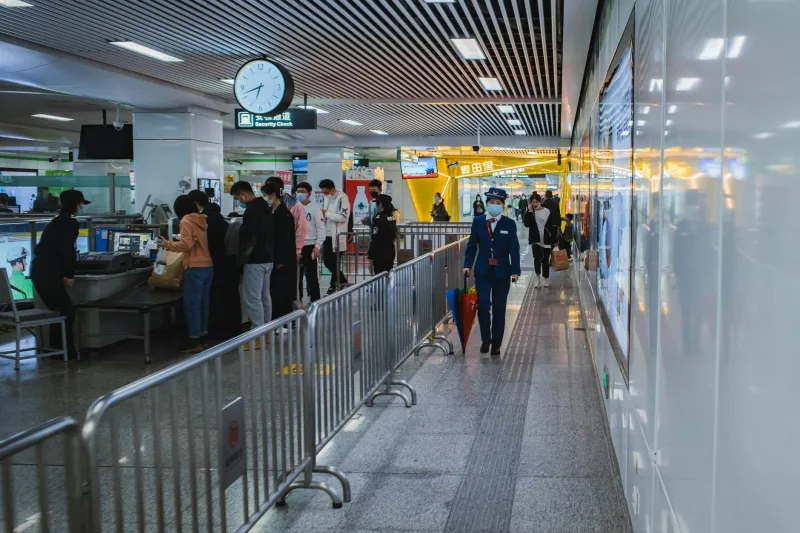
Walk past any major venue, any popular restaurant, any coveted experience, and witness the new hierarchy in action. The traditional queue — that orderly testament to British fairness — has been carved up into premium lanes, VIP fast-tracks, and app-based reservations. The great leveller has been systematically dismantled, replaced by a system that rewards not patience or earliness, but purchasing power and technological privilege.
The Virtue of Waiting
The British queue was never merely about efficiency. It was about something far more radical: the temporary suspension of social hierarchy. In the queue for Wimbledon tickets, the millionaire hedge fund manager waited behind the retired librarian who'd arrived ten minutes earlier. In the post office queue, the lord waited behind the local mechanic. This wasn't just politeness — it was a quiet revolution, repeated daily across the nation.
The queue enforced its own moral code through collective disapproval rather than formal authority. Queue-jumping wasn't illegal, but it was unthinkable. The social contract was so powerful that it needed no enforcement beyond the withering stare of fellow queuers. This was Britain at its most egalitarian — not through legislation or policy, but through shared understanding of fairness.
Consider the genius of this system: it required no bureaucracy, no complex rules, no expensive infrastructure. Just the collective agreement that order matters, that fairness trumps privilege, that patience is a virtue worth preserving. The queue was anarchism in its purest form — a self-governing society that emerged spontaneously wherever people gathered.
The Digital Disruption
The erosion began innocuously enough. Online booking systems promised convenience, efficiency, freedom from the tyranny of waiting. Who could argue against progress? But convenience for some meant exclusion for others. The elderly person without broadband, the working-class family without smartphones, the digitally illiterate — all suddenly found themselves locked out of experiences that were once democratically accessible.
Premium passes and fast-track options followed, marketed as 'enhancements' rather than what they truly were: the monetisation of fairness. Suddenly, the person who'd camped overnight for festival tickets could be overtaken by someone who'd simply paid extra for 'priority access'. The social contract that had governed British public life for generations was being rewritten by Silicon Valley algorithms and corporate greed.
Take Glastonbury, that great celebration of countercultural values. The festival that once embodied anti-establishment ideals now operates a system where the wealthy can effectively buy their way to the front of every queue. The irony is exquisite: a festival built on egalitarian principles has embraced the very hierarchy it once opposed.
The Cultural Casualties
What dies with the queue isn't just fairness — it's community. The traditional queue was a temporary society, complete with its own social dynamics, unspoken rules, and collective identity. Strangers became temporary allies, united in shared purpose and mutual respect for the order. Conversations sparked, friendships formed, collective experiences emerged.
The queue taught patience in an increasingly impatient world. It enforced delayed gratification in an age of instant everything. It reminded us that some things — the best things — are worth waiting for. These weren't just pleasant side effects; they were essential lessons in citizenship and community.
The digital replacement offers none of these benefits. Online booking is solitary, antisocial, dependent on technological access and digital literacy. It creates no community, teaches no patience, enforces no fairness. It's efficient, certainly, but efficiency isn't everything. Some inefficiencies are worth preserving for what they teach us about ourselves.
The New Inequality
The death of the queue reflects a broader transformation in British society. We're witnessing the systematic erosion of institutions that once promoted equality and social cohesion. The queue joins the comprehensive school, the NHS, and public broadcasting as casualties of a philosophy that sees market efficiency as the highest virtue.
The replacement isn't just different — it's actively discriminatory. The new system rewards technological savvy, disposable income, and social capital. It penalises the elderly, the poor, and the digitally excluded. What was once a great equaliser has become another mechanism for reinforcing existing inequalities.
Reclaiming the Line
Perhaps it's time to recognise the queue for what it truly was: not an antiquated inconvenience, but a sophisticated social technology. A system that promoted fairness, built community, and taught valuable lessons about citizenship and respect.
Some institutions understand this. The All England Lawn Tennis Club still maintains the queue for Wimbledon tickets, recognising that the experience of waiting together is part of the tournament's appeal. Small independent venues resist the pressure to implement premium access systems, understanding that their community depends on maintaining democratic principles.
The queue may be disappearing, but its values needn't die with it. In an increasingly unequal society, we need institutions that remind us of our shared humanity. We need spaces where wealth and status don't determine access. We need the patience and community that only come from waiting together.
The queue was never just about waiting. It was about who we are as a society, and who we aspire to be. Its death diminishes us all.