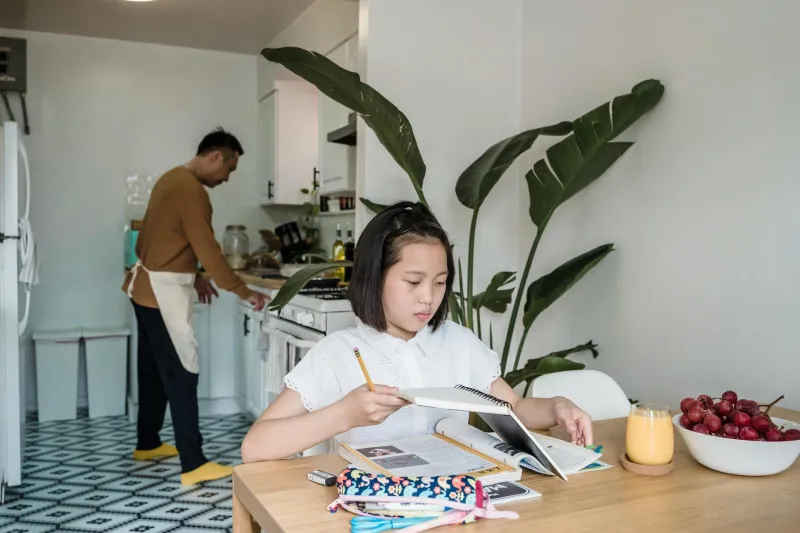
The Kitchen Table Battlefield
Every Tuesday evening, in kitchens across England's remaining selective education areas, a peculiar form of domestic warfare unfolds. Parents who once marched against educational inequality now find themselves drilling their ten-year-olds in verbal reasoning tests, their progressive principles quietly shelved alongside the organic quinoa as they navigate the treacherous waters of 11-plus preparation.
The grammar school debate has always been emotionally charged, but something has shifted in recent years. What was once a relatively straightforward argument about educational opportunity has become a deeply personal crucible for middle-class anxiety, parental guilt, and the enduring British obsession with using academic achievement to resolve questions of social mobility that no individual family should have to answer alone.
The Guilt of Good Intentions
Meet Sarah, a social worker from Maidstone who spent her twenties campaigning for educational equality. She believes, absolutely and without reservation, that selective education perpetuates social division. She also believes that her daughter deserves every possible opportunity. These two convictions sit uncomfortably together as she writes another cheque to a private tutor, telling herself it's just 'levelling the playing field' whilst knowing she's probably doing the opposite.
Sarah represents thousands of parents caught in this impossible bind. They understand the systemic problems with selection at eleven. They can recite the statistics about socioeconomic advantage and educational outcomes. Yet when confronted with their own child's future, abstract principles collide with parental love in ways that leave even the most politically consistent adults questioning everything they thought they believed about fairness and opportunity.
The Tutor Economy Boom
The grammar school regions have spawned an entire cottage industry of preparation services, from intensive weekend courses to online platforms promising to unlock the secrets of non-verbal reasoning. These businesses thrive on parental anxiety, offering the comforting illusion that academic success can be purchased if you're willing to invest enough time, money, and emotional energy.
What's particularly British about this phenomenon is how it's conducted with such elaborate shame. Parents whisper about tutoring arrangements as if discussing an affair. Children are coached to never mention their preparation sessions at school. The whole enterprise operates under a veil of middle-class embarrassment, as if acknowledging the competitive reality would somehow make it more real.
The Postcode Lottery Paradox
The geographical specificity of selective education creates its own peculiar pressures. Families relocate for grammar school catchment areas with the intensity of military strategists, weighing house prices against test scores, commute times against competition ratios. The property market in places like Kent and Buckinghamshire has become inextricably linked to educational aspiration, creating micro-economies where a good Ofsted report can add thousands to house values overnight.
This geographical dimension reveals something uncomfortable about how we think about educational opportunity. Parents who would never consider private education find themselves paying private school premiums through inflated house prices, creating a form of selection by stealth that operates through property rather than fees but achieves remarkably similar results.
The Comprehensive Compromise
Perhaps most tellingly, many parents caught in this dilemma don't actually want grammar schools to exist. They recognise the social problems created by educational selection. They understand that comprehensive education, properly funded and supported, offers better outcomes for society as a whole. But they also understand that their individual child must navigate the system as it exists, not as they wish it were.
This creates a particularly modern form of cognitive dissonance. Parents find themselves simultaneously campaigning against selective education in principle whilst engaging with it in practice. They sign petitions calling for educational equality whilst booking practice tests. They donate to comprehensive school campaigns whilst researching 11-plus success rates.
The Emotional Toll
The psychological cost of this process extends far beyond the financial investment. Children as young as nine find themselves subjected to academic pressure that would have been unthinkable in previous generations. Parents report sleepless nights worrying about their child's future, relationships strained by disagreements over preparation strategies, family life reorganised around the demands of test preparation.
What's particularly corrosive is how this process encourages families to view their children's natural development through the lens of competitive advantage. Every strength becomes a potential asset in the selection process, every weakness a source of anxiety. The unconditional love that should characterise parent-child relationships becomes complicated by performance metrics and outcome anxiety.
The Class Anxiety Engine
Ultimately, the grammar school obsession reveals something profound about British attitudes to class and social mobility. Education has become our primary mechanism for resolving class anxiety—the belief that academic achievement can transcend social background in ways that other forms of success cannot.
This places an enormous burden on individual families to solve through personal effort what are essentially structural social problems. The grammar school question forces parents to confront uncomfortable truths about privilege, opportunity, and the gap between their political ideals and their parental instincts.
Beyond the Test
The real tragedy of the grammar school fever is how it distracts from more fundamental questions about educational quality and social mobility. While middle-class families exhaust themselves competing for selective school places, the broader challenges facing British education—inadequate funding, teacher shortages, regional inequality—receive far less attention.
Perhaps it's time to acknowledge that the grammar school debate has become a displacement activity, a way of channelling broader anxieties about social mobility and educational opportunity into a narrow focus on individual competition. Until we're prepared to address the systemic issues that make parents so desperate for selective education, the kitchen table battlefields will continue to claim casualties among both children and their well-meaning, conflicted parents.