The Accidental Renaissance
On a drizzly Tuesday afternoon in Middlesbrough, where the former Debenhams once stood, thirty people gather in what used to be the perfume department. They're not shopping — they're learning British Sign Language from a volunteer instructor who props her flipchart against a pillar still bearing the ghost outline of a "Chanel" sign. Above them, the escalators have been switched off for three years, but nobody minds. This is what the high street has become when it stopped trying to be the high street.
Across Britain, in the hollowed-out shells of former banks, betting shops, and chain retailers, something unexpected is happening. Not the retail renaissance that politicians promised, but something quieter, more necessary, and infinitely more revealing about what British communities actually need when the performance of commerce finally ends.
The Archaeology of Aspiration
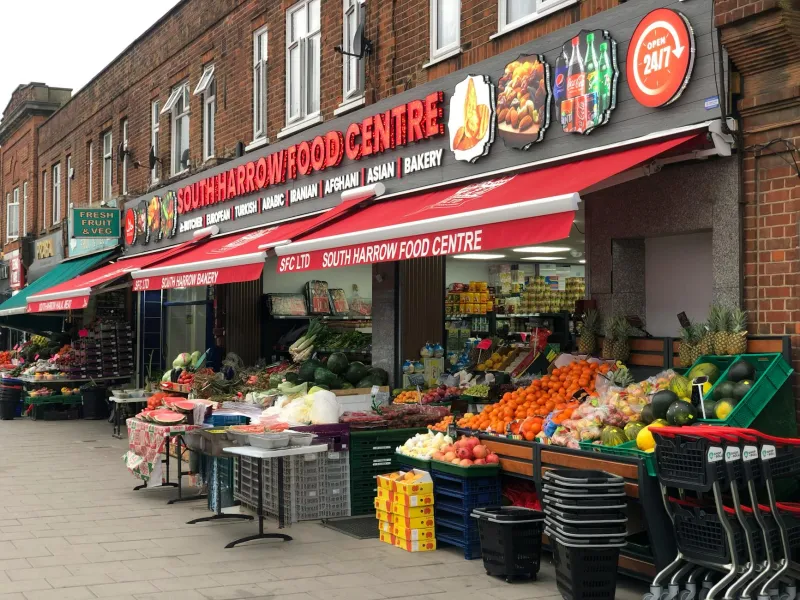
Walk through any British town centre and you can read the layers of economic ambition like geological strata. The Victorian grandeur of former department stores, their cast-iron facades now housing Turkish barbers and vape shops. The 1960s concrete optimism of shopping precincts, their brutal geometry softened by hand-painted signs for immigration advice centres and phone repair kiosks.
Most revealing are the former banks — those temples to financial aspiration with their marble counters and security glass now repurposed as community centres, food banks, and prayer halls. The vault that once secured mortgages and business loans now stores donations for the homeless. The manager's office where credit decisions were made has become a counselling room for debt advice.
This transformation represents more than economic decline — it's a fundamental shift in how British communities understand value, purpose, and belonging.
The Unplanned Economy
What's emerged in Britain's vacant retail spaces is not chaos but a different kind of order — one based on need rather than profit, community rather than commerce. The former Blockbuster has become a foodbank that feeds 200 families weekly. The old Woolworths houses three separate enterprises: a community café, a children's art class, and a support group for carers.
These spaces operate on principles that would mystify the retail chains they replaced. Success is measured in problems solved rather than profits generated. Customer satisfaction means helping someone access benefits, learn English, or simply find community in an increasingly atomised society.
The rent is cheaper, certainly, but the real difference is philosophical. These new occupants don't see empty shops as failed businesses but as opportunity spaces — blank canvases for addressing needs that retail never recognised existed.
The Democracy of Necessity
In Preston's former BHS, a remarkable ecosystem has evolved. The ground floor houses a community kitchen where unemployed chefs teach cooking skills to anyone who wants to learn. The first floor has become a job centre alternative — volunteers helping with CV writing, interview practice, and digital literacy. The former café space now hosts everything from grief counselling to citizenship classes.
This is retail space reimagined as genuinely public space — democratic in a way that commerce never was. No purchase necessary, no minimum spend, no security guards monitoring browsing time. Just people helping people, using the infrastructure that capitalism built but couldn't sustain.
The Spiritual Succession
Perhaps most telling is how many former retail spaces have become places of worship. Sikh temples in former car showrooms, Islamic centres in old furniture stores, Pentecostal churches in abandoned supermarkets. The spiritual has filled the void left by the commercial, offering community and purpose that retail promised but rarely delivered.
These conversions reveal something profound about what British high streets were really selling — not just goods, but the promise of transformation, improvement, a better life. When retail failed to deliver that promise, communities found other ways to meet those deeper needs.
The Craft Revival
In the former Maplin Electronics in Huddersfield, Margaret teaches pottery to anyone willing to learn. The cash registers have been replaced by kilns, the electronics displays by shelves of glazes and tools. She pays £200 monthly rent for a space that once generated thousands in revenue, but her measure of success is different — the retired teacher who discovered clay after her husband died, the teenager who found confidence through making, the community that forms around shared creativity.
This represents a fundamental shift from consumption to production, from purchasing identity to creating it. The high street is learning to make things again, to value process over product, community over commerce.
The Care Infrastructure
What becomes most apparent touring Britain's repurposed retail spaces is how much of what now happens there involves care — caring for the elderly, the unemployed, the isolated, the struggling. The former Argos catalogue shop has become a dementia café. The old Game store now hosts mental health support groups. The abandoned Phones4U provides immigration advice.
This care infrastructure was always needed but never commercially viable. Retail's departure has created space for activities that matter but don't generate profit — the social reproduction that keeps communities functioning but rarely appears in economic statistics.
The Aesthetic of Honesty
There's something refreshingly honest about these converted spaces. No expensive fit-outs, no branded environments designed to manipulate purchasing behaviour. Just practical furniture, handwritten signs, and the accumulated detritus of actual human activity rather than commercial performance.
The former Dorothy Perkins with its chipped floor tiles and fluorescent lighting might not be beautiful, but it's authentic in a way that retail spaces never were. It serves actual needs rather than manufactured desires.
The Network Effect
What's emerging across British town centres is not just individual enterprises but networks of mutual support. The community centre in the old Peacocks shares volunteers with the food bank in the former Comet. The language classes in the abandoned Jessops refer students to the job support service in the old Clinton Cards.
This interconnectedness represents a fundamental difference from retail's competitive isolation. These spaces succeed together or fail together, creating resilience that individual businesses could never achieve.
The Policy Blindness
Yet this quiet transformation remains largely invisible to policymakers still obsessed with retail resurrection. Business rate relief schemes, pop-up initiatives, and regeneration funding all assume that commercial success is the measure of high street health.
Meanwhile, the actual regeneration — social, cultural, spiritual — happens without fanfare in converted chain stores, funded by volunteers and sustained by need rather than profit.
The Future Present
Britain's empty shops have accidentally become laboratories for post-capitalist community life. They show us what happens when spaces serve actual human needs rather than commercial imperatives, when success is measured in problems solved rather than profits generated.
This is not the future politicians promised, but it might be the future we actually need — one where community infrastructure grows from the ruins of commercial infrastructure, where the high street serves people rather than profit, where empty shops become full of life.
The question is whether we'll recognise this transformation for what it is: not the death of the high street, but its rebirth as something far more valuable than it ever was when the tills were ringing.