The Makeover That Changed Nothing
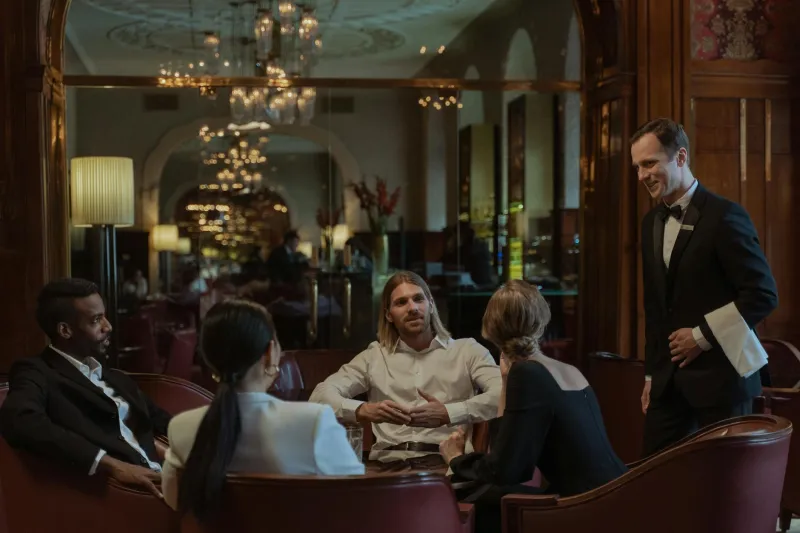
Walk past the discreet entrance of any Mayfair private members' club on a weekday evening and you might notice something different. Where once stood clusters of pin-striped men clutching copies of The Times, you'll now find a carefully curated mix of tech entrepreneurs, fashion editors, and creative directors — many of them women, some of them decidedly under forty, all of them paying handsomely for the privilege of belonging to Britain's most enduring class project.
The transformation appears radical. Clubs that once banned women entirely now boast female chief executives. Institutions that historically excluded anyone without the right school tie now welcome members whose CVs read like LinkedIn success stories rather than Burke's Peerage entries. The old guard's port has been joined by natural wine; the leather armchairs now accommodate MacBooks alongside copies of Country Life.
Yet this apparent revolution masks a more troubling reality: exclusivity has simply learned to speak the language of inclusion.
The New Gatekeepers
Consider the membership process at one of London's recently 'modernised' clubs. Gone are the explicit requirements for Oxbridge degrees or family connections. Instead, prospective members must demonstrate 'cultural contribution' and 'professional distinction' — criteria so subjective they make the old system's class prejudices seem refreshingly honest.
The application process itself has become a masterclass in contemporary gatekeeping. Candidates must secure endorsements from existing members, undergo interviews that assess 'cultural fit', and navigate waiting lists that stretch for years. The £2,000 joining fee and £1,500 annual subscription serve as convenient filters, but the real barriers are more sophisticated: a form of cultural capital that speaks fluent Instagram whilst maintaining the patina of old-world gravitas.
What emerges is a new aristocracy of influence — one that trades on creative credentials rather than hereditary titles, but maintains the same fundamental purpose: to separate the worthy from the merely wealthy, the connected from the merely successful.
The Performance of Progress
The clubs' marketing materials read like manifestos of enlightened capitalism. They celebrate 'diversity of thought' and 'cross-sector collaboration' whilst showcasing carefully staged photographs of members who look like a United Colours of Benetton advertisement circa 2023. The messaging is pitch-perfect for our contemporary moment: exclusive enough to feel special, inclusive enough to feel virtuous.
This rebranding serves multiple constituencies. For existing members, it provides moral cover for continued participation in an inherently elitist institution. For new applicants, it offers the promise of networking without the guilt of old-school privilege. For the clubs themselves, it ensures survival in an era when overt discrimination has become commercially toxic.
The irony is exquisite: institutions founded on exclusion now market themselves as bastions of inclusion, whilst maintaining barriers that are arguably more sophisticated than anything their Victorian founders could have devised.
The Persistence of Privilege
Beneath the progressive veneer, the fundamental dynamics remain unchanged. These spaces continue to serve their original function: facilitating the kind of informal networking that turns business cards into business deals, acquaintances into opportunities, and social capital into actual capital.
The conversations may now include discussions of sustainability and social impact, but they still happen between people who possess the cultural fluency, professional status, and financial resources that mark them as members of Britain's contemporary elite. The guest speakers may be tech founders rather than cabinet ministers, but the underlying transaction — access in exchange for exclusivity — persists unchanged.
The Commodification of Belonging
What's perhaps most revealing about this transformation is how it reflects Britain's broader relationship with its own inequalities. Just as the country has become adept at acknowledging historical injustices without fundamentally addressing contemporary ones, these clubs have mastered the art of progressive rhetoric whilst preserving regressive structures.
The result is a form of velvet rope liberalism that allows participants to feel enlightened whilst participating in systems that remain fundamentally exclusionary. It's inclusion as performance art, diversity as brand management, progress as a membership benefit rather than a moral imperative.
The Price of Entry
In the end, London's private members' clubs have achieved something remarkable: they've convinced a generation of progressives to pay premium prices for the privilege of perpetuating the very systems they claim to oppose. The dress code may have relaxed, the membership rolls may look more diverse, and the wine list may feature organic options, but the essential bargain remains the same: exclusivity for those who can afford it, belonging for those who can perform it, and access for those who understand that the real rules are never written down.
The clubs have evolved, certainly. But in doing so, they've simply proven that privilege, like any successful organism, adapts to survive. In an age of supposed democratisation, they've discovered that the most effective barriers are often the least visible ones.