The Phantom Holiday
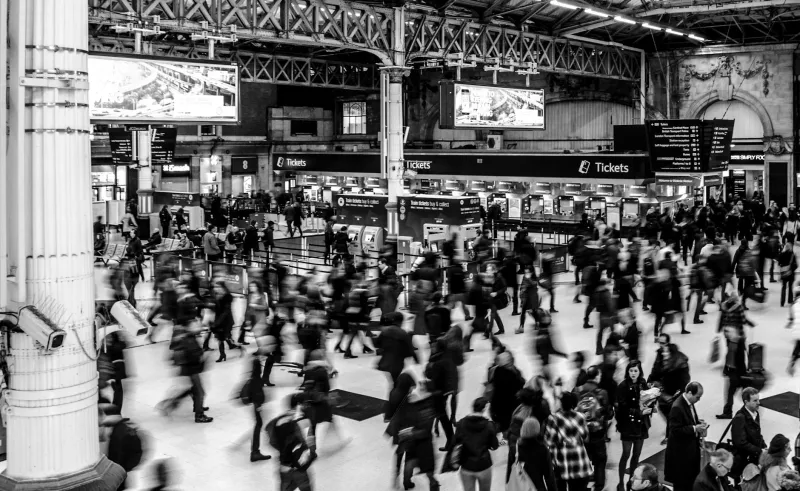
There's something distinctly melancholic about wandering through a British town centre on a bank holiday Monday. The shops are open, the car parks are full, and the general atmosphere suggests not a day of rest but merely a Monday with slightly worse traffic. What was once a sacred pause in the national rhythm—a moment when the entire country agreed to down tools and embrace idleness—has been so thoroughly colonised by commerce and productivity culture that it now resembles nothing so much as a weekend with delusions of grandeur.
The bank holiday, that most Victorian of innovations, was born from a radical idea: that an entire society might benefit from stopping simultaneously. Sir John Lubbock's Bank Holidays Act of 1871 didn't just give workers time off; it created a shared temporal space where collective rest became a civic duty. For over a century, these days maintained their essential character—shops shuttered, public transport reduced, a general sense that the usual rules of commercial life had been temporarily suspended.
The Creeping Commercialisation
Somewhere between the millennium and the pandemic, this changed so gradually that we barely noticed. The shift began innocuously enough: a few garden centres staying open to serve weekend gardeners, some restaurants capitalising on families' desire for leisure dining. But what started as marginal exceptions gradually became the norm, until the very concept of a closed shop on a bank holiday began to seem quaint, even inconsiderate.
The retail industry, with characteristic efficiency, identified the bank holiday as an untapped revenue stream. Marketing departments rebranded these traditional rest days as 'long weekend shopping opportunities' and 'bank holiday sales events.' The language itself reveals the transformation: what was once a holiday—literally a holy day, a time set apart—became a 'long weekend,' a phrase that suggests not rest but extended opportunity for consumption.
The Gig Economy's Relentless Clock
The rise of the gig economy has accelerated this erosion. For millions of British workers, the concept of a guaranteed day off has become increasingly meaningless. Uber drivers, Deliveroo cyclists, and freelance consultants operate in an economy where stopping means losing income, where the traditional rhythms of work and rest have been replaced by the relentless demands of algorithmic scheduling and customer convenience.
This shift represents more than just changing employment patterns; it reflects a fundamental alteration in how we understand the relationship between work and life. The bank holiday was premised on the idea that society had a collective interest in ensuring its members had regular periods of rest. The gig economy operates on the opposite assumption: that individual flexibility and consumer convenience trump any shared commitment to downtime.
The Productivity Delusion
Perhaps most insidiously, we've internalised a culture that mistakes busyness for virtue, activity for achievement. The traditional bank holiday—with its permission for genuine idleness, its celebration of non-productive time—sits uncomfortably with contemporary values that celebrate the side hustle, the optimised weekend, the constant pursuit of self-improvement.
Social media has amplified this pressure, turning bank holidays into opportunities for performance rather than rest. Instagram feeds fill with carefully curated images of productive leisure: the perfectly arranged picnic, the challenging hike, the culturally enriching museum visit. The simple pleasure of doing absolutely nothing has become almost impossible to justify, let alone celebrate.
The Lost Art of Collective Stillness
What we've lost in the erosion of the bank holiday is something more profound than just individual rest time. We've lost the experience of collective stillness—the knowledge that across the country, millions of people are engaged in the same activity: nothing in particular. This shared temporality created a form of social solidarity that transcended class, region, and political affiliation.
The traditional bank holiday fostered what sociologists call 'temporal citizenship'—the sense that we all inhabit the same rhythms of work and rest, that our individual lives are part of a larger social pattern. When these patterns break down, we lose more than just personal downtime; we lose a fundamental form of social cohesion.
The Psychological Costs
The health implications of this shift are only beginning to be understood. The constant availability demanded by modern consumer culture creates a state of perpetual low-level stress that affects not just individual workers but entire communities. When nowhere is ever truly closed, when every day blends into every other day, we lose the psychological benefits of clearly demarcated rest periods.
Research increasingly suggests that genuine rest—not just leisure consumption but actual idleness—is essential for mental health, creativity, and social bonding. The bank holiday, in its original form, provided structured permission for this kind of rest. Its erosion represents a form of collective self-harm disguised as progress.
The European Contrast
Travel to France, Germany, or Italy on a public holiday and the contrast with contemporary Britain is stark. Shops remain resolutely closed, public spaces fill with people engaged in genuinely non-commercial activities, and there's a palpable sense that the normal rules of economic life have been temporarily suspended. These countries have maintained what Britain has lost: the collective conviction that some things matter more than commercial convenience.
This isn't mere European inefficiency or resistance to modernisation. It represents a different understanding of what constitutes social progress—one that values collective wellbeing over individual consumer choice, shared rhythms over personalised flexibility.
Reclaiming the Pause
The question isn't whether we can return to the bank holidays of the 1970s—clearly we cannot. But we might ask whether a society that has forgotten how to stop collectively can truly claim to value the wellbeing of its citizens. The bank holiday, properly understood, was never just about individual rest; it was about creating space for the kind of social life that can't be commodified or optimised.
As we emerge from a pandemic that forced an involuntary pause on normal life, perhaps we might rediscover the radical potential of collective rest. The bank holiday, in its original conception, represented a profound insight: that a society's health can be measured not just by its productivity, but by its capacity to stop, reflect, and simply be together in time.