The Paradox of Paper
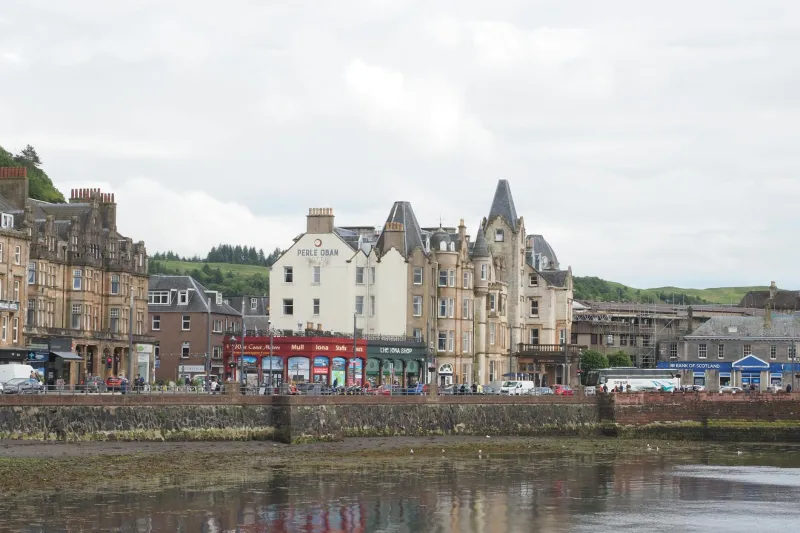
In the wreckage of Britain's high streets, where estate agents multiply like weeds between charity shops and the occasional Costa Coffee, an unexpected victor has emerged. The independent bookshop—that supposed relic of pre-digital commerce—has not merely survived the retail apocalypse; it has thrived.
The statistics tell a story that defies conventional wisdom. Whilst household names like Debenhams and Arcadia collapsed into administration, the number of independent bookshops in Britain has grown by nearly 40 per cent since 2009. This renaissance coincides, rather perversely, with the dominance of Amazon and the ubiquity of e-readers. The question isn't simply why bookshops survived, but why they've become the unlikely symbols of resistance against the homogenisation of British retail.
The Theatre of Discovery
To understand this phenomenon, one must first appreciate what the modern bookshop has become: less a shop than a carefully curated theatre of intellectual possibility. Walk into any thriving independent—from Mr B's Emporium in Bath to Topping & Company in Edinburgh—and you'll witness something that online algorithms cannot replicate: the democracy of accidental discovery.
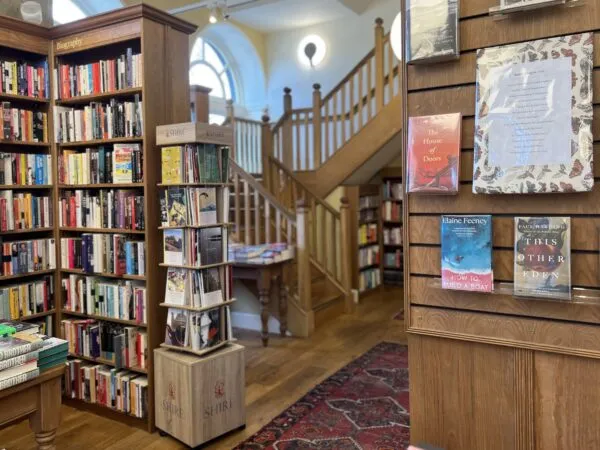 Photo: Topping & Company, via www.thebearandthefox.com
 Photo: Mr B's Emporium, via mrbsemporium.com
The contemporary bookshop owner understands this implicitly. They've transformed their establishments into what sociologist Ray Oldenburg termed 'third places'—spaces that exist neither as home nor workplace, but as communal anchors for civil society. The successful bookshop today sells not merely books but the experience of being amongst books, surrounded by the tangible possibility of knowledge and escape.
This transformation reflects a broader shift in how we conceptualise retail. The 'experience economy', as economists Pine and Gilmore predicted, has rendered traditional transactional retail obsolete. When any book can be delivered to your door within hours, the bookshop must offer something Amazon cannot: the sensory pleasure of browsing, the social ritual of recommendation, the intellectual serendipity of shelf-browsing.
The Gentrification Question
Yet this renaissance comes with uncomfortable questions about accessibility and authenticity. The bookshops driving this revival are predominantly located in areas already marked by cultural capital—university towns, gentrifying neighbourhoods, market towns with robust tourist economies. Their customer base skews overwhelmingly middle-class, educated, and economically comfortable.
This demographic reality raises the spectre of cultural gentrification. Are these bookshops genuine community assets, or simply another form of lifestyle signalling for the professional classes? The answer, unsurprisingly, is both. The same forces that enable bookshops to flourish—disposable income, cultural education, leisure time—are precisely those that can price out existing communities.
The most successful bookshop owners navigate this tension consciously. They host diverse programming, maintain affordable sections, and actively engage with local schools and community groups. But the structural inequalities remain: the bookshop revival, for all its cultural value, reflects and potentially reinforces existing patterns of privilege.
The Pandemic Dividend
COVID-19, paradoxically, accelerated the bookshop renaissance. During lockdowns, when digital fatigue reached epidemic proportions and home delivery became routine, the idea of physical books gained unexpected currency. Sales figures from the Publishers Association show that print book sales increased by 5.5 per cent in 2020, whilst e-book sales remained static.
More significantly, the pandemic reinforced the value of local, independent businesses. The 'shop local' movement, driven by both practical necessity and ethical conviction, provided bookshops with a community mandate they hadn't possessed since the 1980s. Government support schemes, whilst imperfect, helped many independents survive the initial crisis and emerge stronger.
The post-pandemic bookshop serves a population newly conscious of the fragility of cultural institutions. Customers who might previously have defaulted to Amazon now make conscious choices to support local businesses, viewing their purchases as investments in community infrastructure rather than mere transactions.
Beyond Nostalgia
The temptation is to view the bookshop revival through rose-tinted spectacles, as a return to simpler times when commerce possessed human scale and cultural purpose. This narrative, whilst emotionally satisfying, misses the essential point: these are not your grandfather's bookshops.
Contemporary independent bookshops operate with sophisticated social media strategies, embrace online sales platforms, and utilise data analytics to understand customer preferences. They've absorbed the lessons of digital retail whilst maintaining the irreplaceable qualities of physical space and human curation.
The most successful examples function as hybrid institutions: part retailer, part cultural centre, part community hub. They host author events, book clubs, writing workshops, and children's activities. Some incorporate cafés, others sell gifts and stationery. The book remains central, but it's no longer the sole focus.
The Future of Physical Culture
The bookshop revival offers broader lessons about the future of British retail and cultural life. In an increasingly digital world, the value of physical spaces that encourage lingering, browsing, and accidental encounter has grown exponentially. The bookshop succeeds precisely because it cannot be fully replicated online.
This success story also highlights the importance of curation in an age of infinite choice. The independent bookseller's expertise—their ability to recommend, contextualise, and connect books with readers—becomes more valuable as the volume of published material grows exponentially.
Whether this revival represents genuine cultural renewal or merely middle-class consumption preferences dressed in progressive rhetoric remains an open question. What's undeniable is that Britain's bookshops have discovered something essential about contemporary retail: in an age of algorithmic recommendation and frictionless commerce, the messy, inefficient, gloriously human experience of browsing amongst books retains an irreplaceable appeal.
The bookshop's survival suggests that reports of the death of physical retail have been greatly exaggerated—provided that retail can evolve beyond mere transaction to become spaces of genuine cultural and social value.