The Hollowing Out: How Britain's Streets Lost Their Stories to the Gig Economy
The Stranger Next Door
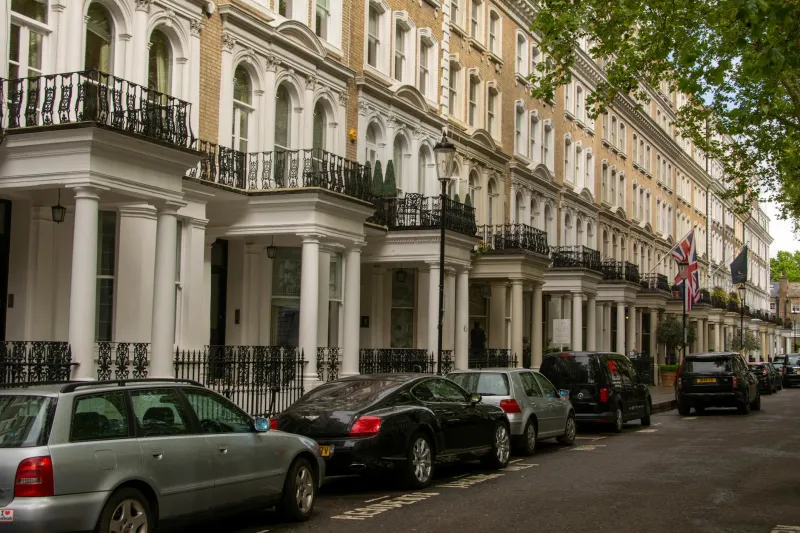
Mrs. Eleanor Whitman has lived on Pembroke Street in Bath for forty-three years. She remembers when the Georgian terraces housed families who knew each other's children, borrowed cups of sugar, and maintained the unspoken social contract that transforms a row of houses into a neighbourhood. Today, she struggles to recognise the faces that appear and disappear behind familiar front doors.
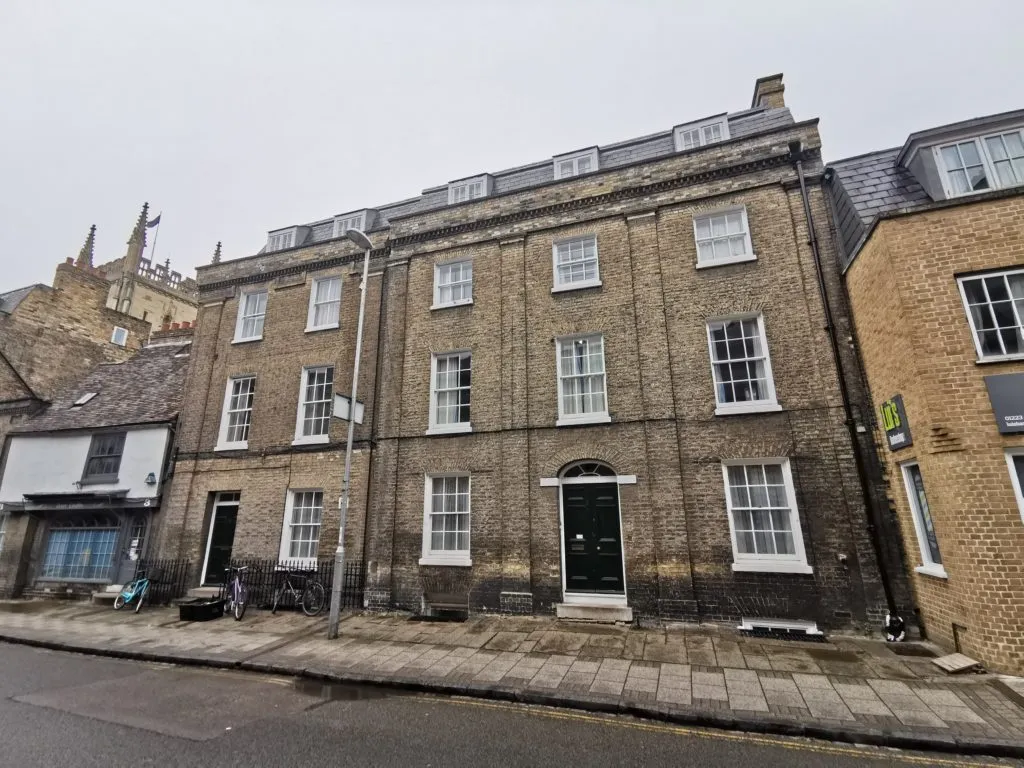 Photo: Pembroke Street, via capturingcambridge.org
"It's not that they're unfriendly," she explains, watching a young couple wheel suitcases past her kitchen window at seven in the morning. "It's that they're not really here at all. They're just passing through."
Pembroke Street exemplifies a transformation occurring across Britain's most desirable postcodes. Of the street's twenty-four properties, eleven now operate as short-term rentals, their occupancy rotating weekly between tourists, business travellers, and what estate agents euphemistically term "lifestyle guests." The social architecture that once bound these addresses into a cohesive community has been quietly dismantled by market forces.
The Arithmetic of Alienation
The mathematics of this shift are straightforward: a two-bedroom flat in central Bath can generate £2,000 monthly through traditional rental or £4,500 through short-term letting. For property owners, particularly those servicing mortgages in an era of elevated interest rates, the economic logic is unassailable. For existing residents, the calculation proves more complex.
Dr. Sarah Fielding, a sociologist at the University of Bath studying neighbourhood dynamics, has documented the subtle but profound changes that occur when residential streets become quasi-commercial spaces. "Community isn't just about proximity," she observes. "It's about shared investment in place—literally and figuratively. When your neighbours have no stake in the street's long-term welfare, the entire social ecosystem shifts."
This shift manifests in countless small ways: bins left out indefinitely because temporary residents don't understand collection schedules; parking disputes that escalate because there's no ongoing relationship to preserve; the gradual abandonment of neighbourhood WhatsApp groups as their utility diminishes.
The Edinburgh Experiment
Nowhere is this transformation more visible than in Edinburgh during Festival season, where entire districts temporarily cease functioning as residential neighbourhoods. The city's Old Town, once home to a mixture of long-term residents, students, and local businesses, now operates as an open-air hotel for three weeks each August.
James MacLeod, who runs a corner shop on the Royal Mile, has watched his customer base shift dramatically over the past decade. "I used to know my regulars—their preferences, their routines, their stories," he reflects. "Now it's all contactless payments and tourists asking for directions. The human connections that made this job meaningful have largely evaporated."
The Festival provides a concentrated preview of what happens when residential areas become fully commoditised. Traditional community institutions—the local pub's quiz night, the residents' association meetings, the informal networks of mutual aid—struggle to maintain relevance when their constituency changes weekly.
The Cotswold Paradox
Perhaps most striking is how this phenomenon has penetrated Britain's rural heartlands. Villages that survived industrialisation, urbanisation, and economic upheaval now find themselves hollowed out by their own desirability. In the Cotswolds, entire hamlets have been transformed into lifestyle destinations for weekend visitors seeking authentic rural experiences.
The village of Chipping Campden, population 2,000, now hosts approximately 1,500 short-term rental beds. Local councillor Margaret Thornton describes the resulting paradox: "Visitors come here seeking the charm of village life, but their presence undermines the very community bonds that created that charm. It's like loving something to death."
 Photo: Chipping Campden, via www.jigsawexplorer.com
The economic benefits are undeniable—local businesses report increased revenue, and property owners enjoy enhanced returns on their investments. Yet something ineffable has been lost: the accumulated social capital that transforms geographic proximity into genuine community.
The Infrastructure of Belonging
Community formation requires what sociologists term "weak ties"—the casual interactions between neighbours that create social cohesion without demanding intimate friendship. The neighbour who notices when you haven't collected your post, who accepts parcels in your absence, who maintains informal surveillance that makes streets safer—these relationships depend on continuity and mutual recognition.
Short-term rentals disrupt this delicate ecosystem. Temporary residents, however well-intentioned, cannot replicate the investment that comes from knowing you'll encounter the same faces tomorrow, next month, next year. They remain perpetual outsiders, exempt from the reciprocal obligations that bind communities together.
The Response from Below
Some neighbourhoods have begun developing creative responses to this challenge. Resident associations in cities like Brighton and York have established "community compacts"—agreements that attempt to bridge the gap between permanent and temporary residents through information sharing and behavioural guidelines.
Other areas have embraced more direct action. In Cornwall, where housing shortages have reached crisis levels, local councils are implementing restrictions on short-term rentals through Article 4 directions, requiring planning permission for changes of use.
Yet these interventions often arrive after the transformation is already complete. Once a neighbourhood's social infrastructure has been dismantled, rebuilding it proves far more difficult than preserving it.
The Price of Flexibility
The short-term rental revolution reflects broader economic trends toward flexibility and asset maximisation. Property, like labour, is increasingly subject to gig economy principles—optimised for immediate returns rather than long-term stability. The consequences extend beyond housing markets to the fundamental question of what we owe each other as neighbours and citizens.
As Britain grapples with social fragmentation, political polarisation, and declining institutional trust, the erosion of neighbourhood-level community bonds represents a particular loss. These local connections traditionally served as democracy's building blocks, creating the social capital necessary for collective action and mutual support.
Counting the Cost
The transformation of Britain's residential streets into temporary accommodation reflects a broader commodification of domestic life. When homes become investment vehicles first and community anchors second, we risk losing something essential about what makes places liveable rather than merely profitable.
Mrs. Whitman still tends her front garden, still nods to passing strangers who might briefly occupy neighbouring houses. But she acknowledges that something fundamental has changed on Pembroke Street. "It's still a lovely place to live," she says, "but it's no longer a place where we live together."
In the arithmetic of modern property markets, that distinction may seem insignificant. For the social fabric of British communities, it may prove the difference between thriving and merely surviving.