The Romantic Beginning
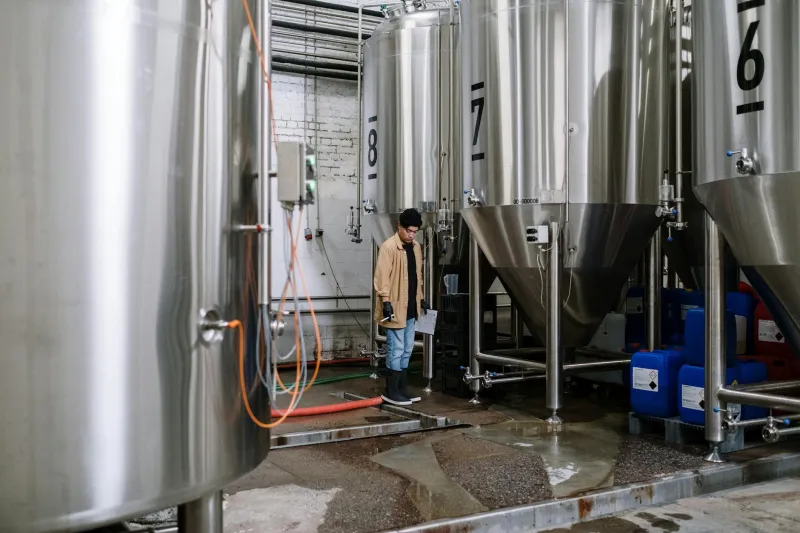
Ten years ago, if you mentioned craft beer in a British pub, you'd likely be met with blank stares and suggestions to try the John Smith's. The movement that would reshape our drinking landscape began modestly: passionate brewers converting abandoned industrial spaces, experimenting with hops in cramped conditions, and selling directly to locals who appreciated something beyond the pale, fizzy offerings of the Big Six.
These pioneers weren't merely brewing beer; they were crafting a narrative of resistance against corporate homogenisation. Each bottle told a story of locality, creativity, and independence that resonated deeply with a generation increasingly sceptical of mass-produced everything. The irony, of course, is that this very authenticity would become the product's most marketable feature.
The Acquisition Trail
The transformation didn't happen overnight, but rather through a carefully orchestrated series of acquisitions that would make any private equity firm proud. Camden Town Brewery's £85 million sale to AB InBev in 2015 marked the beginning of the end for true independence in British craft brewing. What followed was a domino effect: Meantime to SABMiller, Beavertown's partial sale to Heineken, and countless smaller operations quietly absorbed into multinational portfolios.
The mechanics of these acquisitions reveal a sophisticated understanding of consumer psychology. Rather than obliterating the brands entirely, corporations maintained the aesthetic trappings of independence whilst systematically scaling production and distribution. The result? Your 'craft' beer might still wear the same rebellious packaging, but it's likely brewed in industrial facilities using cost-optimised recipes that bear little resemblance to the original.
The Theatre of Independence
Perhaps most troubling is how the industry has weaponised the language of authenticity. Walk through any Tesco and you'll find shelves lined with beers sporting hand-drawn fonts, artisanal imagery, and backstories about passionate brewers following their dreams. The reality is rather different: focus groups determining optimal hop profiles, marketing departments crafting origin stories, and distribution networks that prioritise shelf space over quality.
The Society of Independent Brewers (SIBA) has attempted to maintain standards, but their definition of 'independent' allows for significant corporate investment. This creates a grey area where genuinely independent breweries compete against well-funded operations masquerading as plucky upstarts. The consumer, meanwhile, navigates this landscape with little reliable guidance beyond price points and marketing sophistication.
The Holdouts
Not everyone capitulated to corporate advances. Breweries like Thornbridge, Wild Beer Co, and dozens of smaller operations continue operating independently, often at considerable financial sacrifice. These holdouts face increasingly challenging market conditions: rising ingredient costs, distribution difficulties, and competition from corporate-backed 'craft' brands with deeper marketing budgets.
Speaking to these independent brewers reveals the true cost of maintaining authenticity in a commercialised landscape. They describe sleepless nights over cash flow, difficult decisions about expansion, and the constant pressure to compromise their vision for financial stability. Their persistence represents more than business stubbornness; it's a form of cultural preservation.
Consumer Complicity
The uncomfortable truth is that many drinkers have become willing participants in this deception. The average pub-goer, faced with a choice between a £6 pint from a genuinely independent brewery and a £4.50 pint from a corporate-owned 'craft' brand, often chooses the latter. This isn't necessarily ignorance—many consumers are aware of the ownership structures but prioritise convenience and price over principles.
This pragmatic approach to consumption reflects broader changes in how we relate to authenticity. In an era where Instagram filters create artificial experiences and streaming platforms curate our cultural consumption, perhaps the provenance of our beer matters less than we'd like to admit. The question becomes whether authenticity is an inherent quality or simply another marketing construct.
The New Reality
Today's craft beer landscape resembles a heritage theme park more than a genuine cultural movement. The aesthetic elements remain—tap rooms designed to look like converted warehouses, staff sporting carefully curated facial hair, and marketing that celebrates 'passion' and 'craftsmanship'—but the substance has been systematically extracted and commodified.
This transformation isn't unique to beer; it mirrors patterns across British culture where authentic movements are identified, acquired, and reproduced at scale. From independent music venues becoming corporate chains to local food markets being replicated in shopping centres, we've become adept at consuming the simulation whilst the original quietly disappears.
Beyond the Pint
The craft beer betrayal serves as a microcosm of broader economic and cultural forces reshaping contemporary Britain. It demonstrates how quickly grassroots movements can be co-opted, how effectively corporate marketing can simulate authenticity, and how consumer behaviour often contradicts stated values.
Perhaps the real lesson isn't about beer at all, but about our relationship with independence, authenticity, and the stories we tell ourselves about the choices we make. In a world where everything genuine eventually becomes a product, the craft beer revolution's fate was perhaps inevitable. The question now is whether we're content to drink the simulation, or whether there's still appetite for the real thing—assuming we can still tell the difference.