The Death of Appointment Television
There was a particular electricity that coursed through Britain on Sunday evenings in the 1990s, a collective intake of breath as twenty million people simultaneously gathered around their television sets for the latest episode of whatever drama had captured the national imagination. The phenomenon was so reliable that the National Grid would brace itself for the post-programme surge as millions of kettles were simultaneously switched on during the credits.
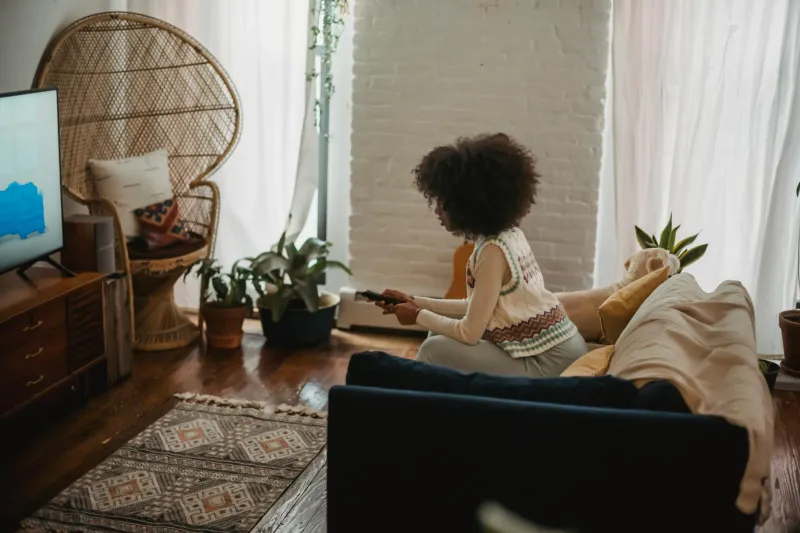
That Britain—the Britain of shared viewing, collective gasps, and Monday morning water-cooler dissections—has been quietly dismantled by the streaming revolution. In its place, we have constructed something altogether more curious: a nation more culturally synchronised than ever in its tastes, yet fundamentally atomised in the act of consumption.
The paradox is striking. Walk into any British workplace today and you will find colleagues united in their obsessions with the same handful of programmes—The Crown, Line of Duty, Succession—yet each has consumed these cultural touchstones in the solitude of their own homes, at their own pace, according to their own schedule. We have never been more aligned in our cultural preferences, yet never more alone in our cultural experiences.
The Tyranny of Personal Scheduling
The streaming platforms promised liberation from the tyranny of broadcast schedules, and they have delivered precisely that. No longer must we arrange our lives around television programmes; instead, we can arrange television programmes around our lives. This freedom has come to feel less like liberation than like another burden of choice in an already over-complicated existence.
The appointment television of the broadcast era may have been inflexible, but it also provided something we did not fully appreciate until it was gone: a shared temporal experience that transcended individual preferences and domestic arrangements. When EastEnders aired at 7:30 PM on Tuesday, it created a moment of national synchronicity that briefly united viewers across class, geography, and circumstance.
Today's viewing habits are relentlessly individualised. We watch what we want, when we want, how we want—often whilst simultaneously scrolling through our phones, pausing for domestic interruptions, fast-forwarding through bits that bore us. The programme becomes not a shared cultural event but a personalised entertainment product, tailored to our individual attention spans and viewing preferences.
The Binge-Watching Isolation
Nothing embodies the atomisation of British viewing culture quite like the phenomenon of binge-watching. The practice—consuming entire series in marathon sessions of solitary viewing—has become so normalised that we rarely pause to consider what it represents: the complete privatisation of what was once an inherently social activity.
The binge-watcher exists in a state of voluntary cultural quarantine, disappearing for entire weekends to consume the latest Netflix sensation. They emerge, blinking, into a world where their friends and colleagues are at different stages of the same narrative journey, making genuine discussion impossible without the elaborate dance of spoiler warnings and careful conversational navigation.
This is not merely a change in viewing habits; it is a fundamental alteration in how we process and share cultural experiences. The broadcast era forced us to digest programmes slowly, to discuss them with others who had seen exactly the same episodes, to build collective interpretations and shared theories. The binge-watching culture eliminates this collaborative meaning-making, replacing it with a series of individual consumption experiences that resist genuine communal engagement.
The Algorithm's False Democracy
The streaming platforms have democratised access to content whilst simultaneously stratifying our viewing experiences in ways that the old broadcast system never could. The recommendation algorithms that govern our viewing choices create what sociologist Eli Pariser termed "filter bubbles"—personalised information ecosystems that gradually narrow rather than expand our cultural horizons.
Two viewers who both claim to love British drama may find themselves served entirely different recommendations based on their previous viewing patterns, gradually diverging into separate cultural universes despite their shared starting point. The algorithm's promise of personalisation becomes a form of cultural segregation, subtly but inexorably dividing audiences along lines of preference and behaviour.
This represents a profound departure from the broadcast era's crude but effective cultural democracy. When there were only four channels, viewers were regularly exposed to programmes they might never have chosen for themselves—documentaries, foreign films, experimental drama. The limited choice forced a kind of cultural cross-pollination that the abundance of streaming content has eliminated.
The Loss of Shared Reference Points
Perhaps the most profound loss in this transformation is the erosion of shared cultural reference points that once provided a common language for British society. The broadcast era created a shared vocabulary of characters, catchphrases, and moments that transcended individual tastes and social boundaries. These references served as cultural shorthand, enabling strangers to connect through their shared viewing experiences.
Today's fragmented viewing landscape makes such shared references increasingly rare. Even programmes that achieve massive popularity—Bridgerton, The Queen's Gambit, Squid Game—are consumed at different times and in different contexts, reducing their potential to create the kind of collective cultural moments that once punctuated British life.
The result is a peculiar form of cultural loneliness. We may be watching more television than ever before, and we may be watching programmes that millions of others are also watching, but we are doing so in isolation from one another, without the shared temporal experience that transforms individual viewing into collective culture.
The Commodification of Attention
The streaming revolution has also fundamentally altered the relationship between viewers and the medium itself. Television was once a service—programmes were broadcast for the public good, funded by licence fees or advertising revenue. Now it has become a product—content is created to capture and monetise individual attention, with success measured not by cultural impact but by engagement metrics and subscription retention.
This shift has profound implications for the type of content being produced. The broadcast era incentivised programmes that could capture and hold mass audiences, leading to a shared cultural diet of broadly appealing content. The streaming era incentivises programmes that can capture and hold individual attention for extended periods, leading to increasingly niche content designed to appeal intensely to specific demographic segments.
The result is a cultural landscape that is simultaneously more diverse and more fragmented than ever before. There are more programmes being produced, covering more perspectives and experiences, but fewer programmes that successfully cross demographic boundaries to create genuinely shared cultural experiences.
The Nostalgia for Collective Experience
Interestingly, the streaming age has also created a powerful nostalgia for the collective viewing experiences it has displaced. The success of programmes like Gogglebox—which literally shows us other people watching television—reveals a deep longing for the communal aspect of viewing that we have traded away for convenience and choice.
Similarly, the phenomenon of "appointment streaming"—the practice of deliberately watching new episodes of certain programmes immediately upon release to avoid spoilers and participate in online discussions—represents an attempt to recreate the shared temporal experience of broadcast television within the streaming paradigm.
These trends suggest that the atomisation of viewing culture has come at a genuine cost to our sense of cultural community. We have gained unprecedented choice and convenience, but we have lost something essential about the social function of television as a shared cultural space.
Reclaiming Collective Culture
The challenge facing British culture in the streaming age is how to preserve the benefits of increased choice and accessibility whilst recovering some of the communal aspects of shared viewing that have been lost. This is not simply a matter of nostalgia for a simpler time, but a recognition that culture serves social as well as individual functions.
Perhaps the solution lies not in returning to the constraints of broadcast television, but in consciously creating new forms of collective viewing experience within the streaming paradigm. This might involve deliberately synchronising viewing schedules with friends and family, participating more actively in online discussions of programmes, or simply being more intentional about watching programmes at the same time as others.
The streaming revolution has given us unprecedented control over our viewing experiences, but it has also reminded us that some things are lost when we exercise that control in isolation. The challenge now is to find ways to use our newfound freedom to create rather than diminish the shared cultural experiences that bind us together as a society. The programmes may be the same, but the Britain that watches them has been fundamentally transformed—and not entirely for the better.