Beyond the M25: The Quiet Revolution of Britain's Self-Made Cities
The End of Provincial Deference
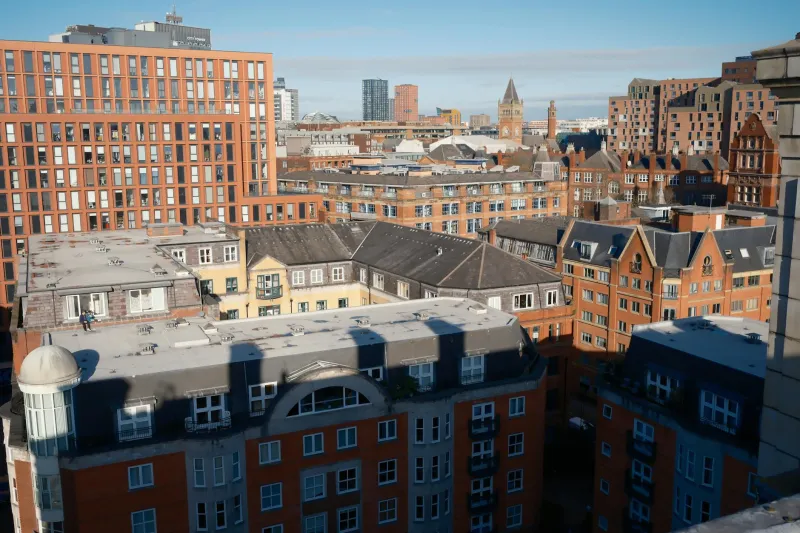
Something has shifted in the cultural geography of Britain. Walk through the Northern Quarter of Manchester, the harbour districts of Bristol, or the merchant city of Glasgow, and you'll encounter a phenomenon that would have been unthinkable a generation ago: cities that have stopped apologising for not being London. These places aren't positioning themselves as cheaper alternatives to the capital or consolation prizes for those who couldn't make it south. They're developing their own gravitational pull.
This isn't the familiar story of regional regeneration through property development and shopping centres. Instead, we're witnessing the emergence of genuinely confident creative ecosystems that operate according to their own logic. Manchester's music scene doesn't look to London for validation. Bristol's street art doesn't require metropolitan approval. Glasgow's comedy circuit has stopped treating Edinburgh as the ultimate arbiter of Scottish humour.
The Authenticity Arms Race
Yet authenticity in contemporary Britain is never quite that simple. These cities' newfound confidence coincides suspiciously with a broader cultural moment that fetishises 'the real' and 'the local' as antidotes to globalised homogeneity. The question becomes whether we're witnessing genuine cultural autonomy or watching cities perform their own distinctiveness for an audience of potential residents, investors, and tourists.
Consider how Manchester has cultivated its post-industrial identity. The city's marketing materials celebrate its 'grit' and 'authenticity' with the same professional polish once reserved for luxury brands. Former mill buildings house artisan coffee roasters and independent galleries, but the transformation follows a remarkably consistent template. The aesthetic of authentic urban decay has become as standardised as any corporate rebrand.
Bristol presents an even more complex case. The city's reputation for creative independence rests partly on Banksy's anonymous interventions, but his global fame has turned Bristol into a pilgrimage site for street art tourism. The result is a curious feedback loop where genuine grassroots creativity becomes a civic asset that must be carefully managed and preserved. The city now employs street art curators — a job title that would have been oxymoronic a decade ago.
The London Exodus as Cultural Opportunity
The pandemic accelerated trends that were already reshaping British cultural geography. As remote working normalised and London property prices reached genuinely absurd levels, the capital's creative class began its first significant exodus since the Second World War. But unlike previous waves of metropolitan flight, this one wasn't driven by defeat or compromise. Many departing Londoners spoke of actively choosing provincial cities over the capital.
This migration brought metropolitan cultural capital to cities that were already developing their own creative confidence. The result hasn't been simple colonisation — London refugees imposing their tastes on grateful provincial audiences — but rather a more complex process of cultural hybridisation. Former London gallerists opening spaces in Leeds discover they must adapt to different audiences and different economic realities. Ex-metropolitan food writers find themselves documenting genuinely distinct regional food cultures rather than variations on London themes.
The political dimension of this shift cannot be ignored. The rhetoric of 'levelling up' may have originated as electoral strategy, but it has provided intellectual cover for a broader cultural rebalancing. Cities like Newcastle and Liverpool now frame their cultural development not as catching up with London but as offering alternatives to London's particular form of metropolitan sophistication.
The Infrastructure of Independence
What distinguishes the current provincial renaissance from previous false dawns is the development of genuinely independent cultural infrastructure. These cities aren't just hosting touring productions from London or providing cheaper locations for metropolitan cultural industries. They're developing their own institutions, their own critical discourse, and their own networks of cultural validation.
Glasgow's contemporary art scene operates through a web of artist-run spaces, independent galleries, and alternative venues that rarely intersect with London's commercial art world. The city's artists show internationally without necessarily passing through the capital first. Similarly, Manchester's independent music venues and record labels have created pathways to national and international recognition that bypass the traditional London gatekeepers.
This institutional independence extends to cultural criticism and journalism. Regional publications like The Skinny in Scotland and Now Then in Sheffield provide platforms for cultural discourse that doesn't defer to metropolitan opinion. These aren't parish newsletters celebrating local achievements; they're sophisticated critical voices that treat their cities as worthy of serious cultural attention.
The Limits of Cultural Decentralisation
Yet the gravitational pull of London remains formidable. The capital still controls the majority of cultural funding, media attention, and commercial opportunities. A Manchester band may build a devoted local following, but they'll still need London's approval to reach a national audience. A Bristol artist may thrive in the city's independent scene, but commercial success likely requires metropolitan representation.
The streaming economy has created new possibilities for bypassing traditional gatekeepers, but it has also concentrated cultural power in the hands of algorithmic platforms that show little interest in regional distinctiveness. Spotify's playlist curators are more likely to be based in Stockholm than Stoke-on-Trent, and their recommendations reflect global rather than local tastes.
Perhaps more fundamentally, the provincial renaissance remains dependent on a particular class of mobile creative professionals who can afford to relocate and who possess the cultural capital to establish new scenes. The celebrated diversity of Manchester's Northern Quarter or Bristol's Stokes Croft reflects the preferences of university-educated migrants rather than long-term residents. The risk is that cultural decentralisation becomes another form of gentrification, displacing existing communities in the name of creative authenticity.
The Question of Scale
What we're witnessing may be less a fundamental shift in British cultural geography than a modest rebalancing within existing hierarchies. London's dominance was so overwhelming that any movement towards the provinces appears revolutionary. But the cities benefiting from this cultural redistribution remain a small subset of Britain's urban landscape — primarily those with existing universities, transport links, and post-industrial heritage that can be aestheticised.
The real test of this provincial renaissance will be its ability to develop cultural forms that couldn't exist in London — not just cheaper versions of metropolitan sophistication, but genuinely different ways of making and consuming culture. The most promising developments may be those that embrace rather than overcome the constraints of provincial life: the intimacy of smaller scenes, the possibility of genuine community, the freedom from metropolitan expectations.
Britain's cultural future may indeed lie beyond the M25, but only if these cities resist the temptation to become what London once was and instead discover what only they can be.