Seven Courses of Surrender: When Fine Dining Became Britain's Most Expensive Therapy Session
The Art of Culinary Submission
Somewhere between the amuse-bouche and the pre-dessert palate cleanser, British fine dining lost its collective mind. What began as a genuine culinary tradition — the chef's opportunity to showcase seasonal ingredients and technical prowess — has metastasised into something approaching performance art, with diners cast as unwilling participants in an elaborate ritual of gastronomic submission.
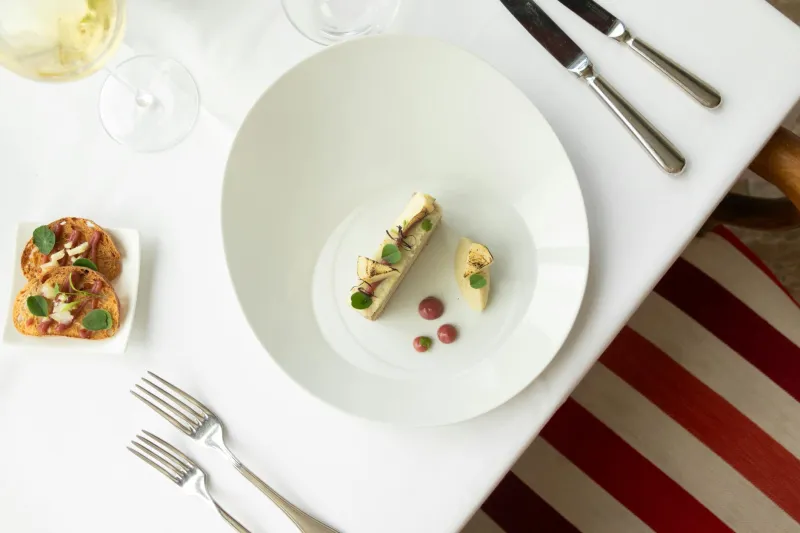
The tasting menu has become the default mode of aspirational dining across Britain, from Michelin-starred temples in Mayfair to ambitious gastropubs in market towns. The format promises transcendence but delivers something closer to endurance testing: seven to fifteen courses of increasingly precious preparations, served at intervals calculated to transform hunger into something approaching Stockholm syndrome. You didn't want the deconstructed shepherd's pie served on a slate, but by course six, you've learned to be grateful for whatever arrives.
The Democratisation of Haute Cuisine Anxiety
This represents a fundamental shift in the social contract between restaurant and diner. Traditional à la carte dining operated on principles of consumer sovereignty — you chose what you wanted, when you wanted it, and in what quantities. The tasting menu inverts this relationship entirely. The chef becomes a benevolent dictator, the waitstaff their loyal commissars, and the diners grateful subjects receiving whatever bounty the kitchen deems appropriate.
The British enthusiasm for this arrangement reveals something profound about our relationship with authority and cultural anxiety. We're a nation that queues instinctively and apologises reflexively, but we've also cultivated a healthy scepticism of those who presume to know what's best for us. The tasting menu resolves this tension by framing submission as sophistication. You're not surrendering agency; you're demonstrating the cultural confidence to trust an expert.
This trust doesn't come cheap. The average tasting menu in London now costs more than many Britons spend on groceries in a month, before wine pairings that can double the bill. The price point serves multiple functions: it signals the experience's exclusivity, justifies the extended time commitment, and creates sufficient financial investment that diners feel compelled to find meaning in whatever arrives at their table.
The Theatre of Informed Consent
Modern tasting menus come wrapped in elaborate rituals of pseudo-consent. Servers inquire about allergies and dietary preferences with the thoroughness of medical professionals, creating the illusion that your individual needs matter. In reality, these consultations primarily serve to identify potential obstacles to the kitchen's predetermined vision. The vegetarian option isn't a genuine alternative; it's the same tasting menu with protein substitutions, like dubbing a foreign film rather than writing new dialogue.
The most insidious aspect of contemporary tasting menu culture is its appropriation of therapeutic language. Dishes are described as 'journeys' and 'experiences.' The meal becomes a 'narrative' with 'chapters' and 'themes.' Diners aren't eating; they're undergoing transformation. The server isn't describing food; they're providing interpretation for an artistic statement. This linguistic inflation transforms legitimate criticism into philistinism. If you didn't enjoy the foam course, perhaps you weren't sufficiently open to the chef's vision.
The Paradox of Forced Spontaneity
The tasting menu promises spontaneity whilst delivering its opposite. The kitchen knows exactly what you'll eat, when you'll eat it, and how much you'll pay for the privilege. The only genuine surprise is whether you'll enjoy it, but even that response has been carefully orchestrated through portion sizes calibrated to maintain interest without satisfaction, flavour combinations designed to challenge without alienating, and presentation calculated to photograph well for social media documentation.
This orchestration extends to the dining room itself. Tables are booked in waves to ensure synchronized service. Courses arrive with military precision across multiple tables simultaneously. The spontaneous conversation that might emerge from choosing your own meal gives way to choreographed explanations of ingredients, techniques, and inspirations. The restaurant becomes a theatre where the same performance plays multiple times each evening, with diners as both audience and unwitting actors.
The Sociology of Culinary Endurance
Perhaps most tellingly, the British tasting menu scene has developed its own elaborate etiquette around suffering. Diners learn to appreciate courses they don't enjoy, to find meaning in combinations that don't work, and to express gratitude for experiences that leave them hungry. The ability to sit through a four-hour meal of challenging food becomes a form of cultural capital, demonstrating sophistication through sheer endurance.
This dynamic reveals the essentially masochistic nature of contemporary fine dining culture. We've created an expensive form of entertainment based on the principle that pleasure must be earned through discomfort. The diner who admits to preferring simple preparations over molecular gastronomy reveals themselves as unsophisticated. The guest who requests additional bread becomes a problem to be managed rather than a customer to be satisfied.
The wine pairings that accompany most tasting menus intensify this dynamic. Carefully calibrated alcohol consumption ensures that diners become increasingly compliant as the evening progresses, less likely to question unusual flavour combinations or excessive waiting times between courses. By the final savoury course, resistance has been chemically as well as culturally suppressed.
The Death of Convivial Dining
Traditional British dining culture, for all its limitations, was fundamentally social. The pub meal, the Sunday roast, even the formal dinner party operated on principles of shared pleasure and communal choice. Diners could engage with their food and each other according to their own rhythms and preferences. Conversation flowed naturally around shared dishes and familiar formats.
The tasting menu atomises this social experience. Each diner receives identical portions at predetermined intervals, eliminating the possibility of sharing, comparing, or choosing differently. Conversation becomes secondary to the performance of appreciation. The meal's rhythm is controlled entirely by the kitchen, creating an essentially passive experience disguised as culinary adventure.
The Emperor's New Courses
The most damning aspect of Britain's tasting menu obsession may be its fundamental dishonesty. These elaborate productions rarely deliver the transcendent experiences they promise. Most diners leave expensive tasting menu restaurants still hungry, having consumed perhaps 1,200 calories across three hours of careful presentation. The satisfaction comes not from the food itself but from having participated in an exclusive cultural ritual.
Yet admitting disappointment requires acknowledging that you've wasted significant money and time on an experience that failed to deliver. The social pressure to find meaning in expensive meals creates a feedback loop where criticism becomes impossible. Everyone pretends to have been transformed by the chef's vision, and the emperor's new courses remain invisible to all but the most confident cultural critics.
The tasting menu's stranglehold on British fine dining represents more than culinary fashion; it's a symptom of our broader anxiety about taste, authority, and cultural legitimacy. We've created an expensive form of dining that prioritises the chef's expression over the diner's satisfaction, transforming restaurants into galleries where food becomes art and customers become critics obligated to find meaning in whatever they're served.
Perhaps it's time to admit that sometimes we just want to choose our own bloody dinner.