Making Do, Beautifully: The Middle-Class Reinvention of Austerity as Aesthetic
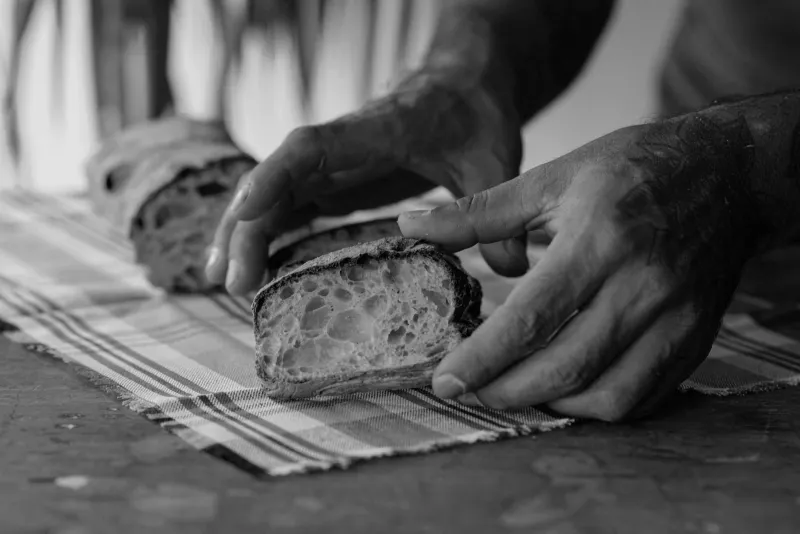
The casserole dish is Le Creuset, inherited from a grandmother who purchased it in 1974. The tablecloth is linen, slightly faded, bought at a French market eight summers ago. The wine is from a case discovered at an estate sale — remarkable value, actually — and the bread was made on Saturday morning from a sourdough starter that has been, the host will tell you with quiet pride, alive for three years. Nothing here is new. Everything here is considered. And the entire tableau has been assembled with the kind of care that money cannot quite buy, though a great deal of it has clearly been spent in the attempt.
This is the aesthetics of austerity, middle-class edition — and it is, at present, one of Britain's most elaborate and revealing cultural performances.
The Reinvention of Restraint
Britain has always maintained an ambivalent relationship with the open display of wealth. The aristocratic tradition of studied shabbiness — the ancestral home that hasn't been redecorated since the Attlee government, the battered Land Rover driven by someone whose estate runs to several thousand acres — established early the cultural cachet of conspicuous non-consumption. To spend visibly was, for a particular class of Briton, to reveal that you had only recently acquired something worth spending.
What is happening now is something both continuous with that tradition and distinctly contemporary. Faced with genuine economic pressure — the cost of living crisis, the contraction of disposable income, the evaporation of the kind of financial security that once seemed permanent — a significant portion of Britain's professional middle classes has performed a remarkable act of cultural alchemy. They have taken necessity and rebranded it as virtue. They have taken constraint and called it taste.
The vintage coat is not merely affordable; it is sustainable. The decision to holiday in the Scottish Highlands rather than Tuscany is not merely economical; it is intentional. The kitchen garden, the batch cooking, the mended rather than discarded garment — each of these is simultaneously a practical response to reduced circumstances and a carefully curated signal of values. The performance of restraint has become, paradoxically, its own form of status.
The Vocabulary of Virtuous Thrift
Listen carefully to the language that has accrued around this phenomenon and you will find it extraordinarily revealing. Things are not cheap; they are considered. Purchases are not avoided out of financial necessity; they are foregone in the service of a simpler, more intentional life. The second-hand bookshop is not a substitute for Waterstones; it is an experience. The allotment is not hard work born of necessity; it is grounding.
This vocabulary does considerable ideological work. It transforms the passive experience of having less into the active choice of wanting less — a reframing that preserves dignity whilst simultaneously elevating the speaker's moral standing. In a culture that has grown uncomfortable with naked aspiration, the performance of contented sufficiency has become the aspirational position.
Nor is this entirely cynical. Many of those who have adopted the language of intentional simplicity have done so in genuine response to a dawning recognition that the consumption patterns of the preceding decades were neither sustainable nor, in the end, particularly satisfying. The sourdough starter is not always a prop. The allotment is not always a performance. Sometimes it is simply a person finding, in constrained circumstances, something unexpectedly nourishing.
But the difficulty — and it is a genuine one — is in distinguishing the authentic from the aestheticised, the necessity from its simulation.
The Simulation Problem
Here lies the central tension within this cultural moment. The aesthetics of austerity, as practised by Britain's comfortable professional classes, requires something that actual austerity does not: money. The carefully sourced vintage furniture costs more than its flat-pack equivalent. The artisan bread flour, the heritage seed catalogue, the ethically produced everything — these are premium products wearing the costume of frugality. The performance of making do is, in many cases, extraordinarily expensive.
This is not a trivial observation. At a moment when significant numbers of British households are making genuinely difficult choices about heating and eating, the middle-class reinvention of austerity as lifestyle philosophy carries an uncomfortable charge. There is something faintly grotesque about the performance of thrift as aesthetic at a time when thrift, for many, is simply the unadorned reality of not having enough.
The vintage-as-investment mindset — the conviction that the carefully chosen second-hand item represents not compromise but wisdom — is available only to those with the time, knowledge, and capital to navigate the vintage market effectively. The slow food philosophy requires, above all, leisure. And leisure, as it has always been, is a class privilege dressed in the language of universal virtue.
What the Performance Reveals
And yet what makes this cultural moment genuinely interesting is not its hypocrisy — which is hardly unique — but what its emergence reveals about the anxieties of contemporary British middle-class identity.
For a generation that came of age during the long boom, that was promised property ownership and upward mobility as near-certainties, the discovery that these certainties were contingent has been profoundly disorienting. The aestheticisation of constraint is, in part, a grief response — a way of making meaning from a situation that was not chosen and cannot easily be changed. If you cannot have the life that was promised, you can at least construct a narrative in which the life you have is the one you would have chosen anyway.
There is also, beneath the performance, a genuine and not ignoble impulse: the desire to find value in what endures rather than what is merely new, to resist the disposability that has characterised so much of recent consumer culture, to locate pleasure in craft and duration rather than novelty and replacement. These are serious values, and they deserve serious engagement rather than mere mockery.
The Uncomfortable Mirror
Britain's middle classes have always used consumption — and its studied avoidance — as a language of identity. What the current moment has produced is a particularly complex dialect: one in which financial pressure, genuine ethical concern, aesthetic preference, and social performance have become so thoroughly entangled as to be nearly inseparable.
The casserole dish, the sourdough, the conscientiously mended coat — these are not simply objects. They are arguments. They are, in their quiet way, a position on what a good life looks like in straitened times. Whether that position is sincere or performed, necessary or chosen, is a question that each household must answer for itself — and one that, in answering, reveals rather more than it perhaps intended.