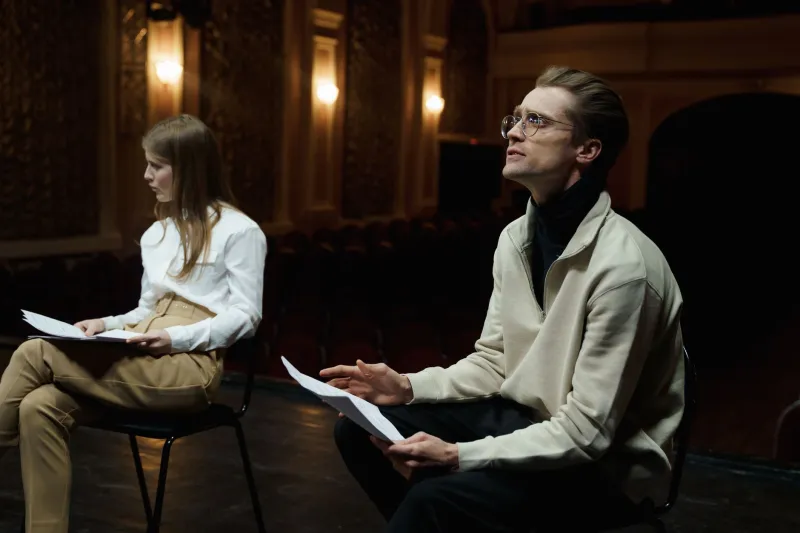
The Pause That Refreshes: How the Great British Interval Became a Cultural Lifeline
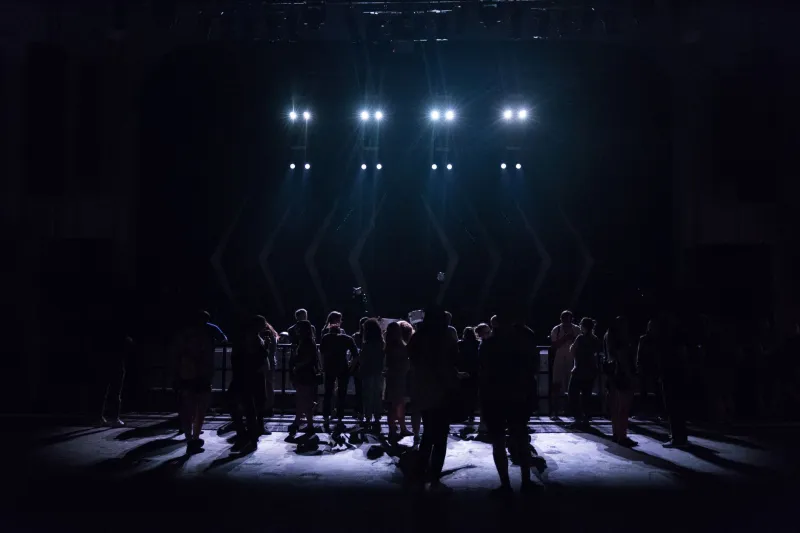
At approximately nine fifteen on a Wednesday evening at a mid-sized regional theatre, something remarkable occurs. The house lights rise, the audience stirs, and several hundred people who have spent the previous ninety minutes in disciplined silence suddenly begin to speak — to strangers, to companions, to nobody in particular — with an animation that suggests they have been storing the words under considerable pressure. The foyer fills. The bar queue forms with what might be described, in the British context, as enthusiasm. Opinions are exchanged, confusions resolved, and connections, however fleeting, are made.
This is the interval. And it is, against all reasonable expectation, having something of a moment.
The Seamless Experience and Its Discontents
The past decade of cultural consumption has been defined, above all else, by the elimination of interruption. Streaming platforms autoplay the next episode before the credits have finished rolling. Playlists are engineered for unbroken flow. Films are released in cuts that excise anything that might disturb the momentum. Even the architecture of digital content — infinite scroll, autoplay, the disappearing pause button — is designed to prevent the viewer from doing the one thing that might break the spell: stopping to think.
This seamlessness is presented as a virtue, a courtesy extended to the audience. In practice, it functions more like a form of capture. The unbroken experience does not merely entertain; it precludes the reflective space in which entertainment becomes something richer — something that might be called, without embarrassment, culture.
The interval interrupts this logic entirely. It insists on a pause. It refuses to carry you forward on a current of continuous stimulation. And in doing so, it returns to the audience something that seamless consumption quietly removes: agency.
The Social Architecture of the Foyer
It is worth considering what actually happens during an interval, because the activities involved are considerably more interesting than the warm Pinot Grigio might suggest.
People talk. Not in the careful, performance-adjacent whispers of the auditorium, but in the unrehearsed, exploratory way of people processing a shared experience in real time. They disagree about what they have seen. They notice details the person beside them missed. They revise initial impressions in the light of what a companion says. They encounter strangers whose reactions illuminate their own.
This is, in the most literal sense, the formation of culture — the social negotiation of meaning that transforms a private aesthetic experience into a shared one. It is precisely what happens in the comment sections of streaming platforms, except that it happens in person, with nuance, with humour, with the full communicative resources of embodied human presence rather than the flattened vocabulary of the emoji response.
Several theatre directors and artistic programmers, speaking to Smith's Magazine, have noted that post-show discussions — long regarded as the primary mechanism for audience engagement — are frequently less revealing and less energetic than interval conversations. The mid-show pause, it seems, catches people at exactly the moment when their responses are most alive: formed enough to articulate, incomplete enough to remain genuinely open.
The Commercial Argument
There is, of course, a more prosaic dimension to the interval's revival, and cultural institutions are refreshingly honest about it. The bar takings during a twenty-minute interval can represent a significant proportion of an evening's non-ticket revenue. At a time when arts organisations face sustained funding pressures, the commercial case for the intermission requires no elaborate justification.
But the commercial and the cultural arguments are less separate than they might appear. The interval funds the programme. The programme justifies the interval. The social experience of the interval increases audience loyalty and repeat attendance in ways that the quality of the production alone cannot always achieve. Several venue managers have observed that audiences who describe an evening as 'a great night out' — the phrase that drives word-of-mouth recommendation and return visits — are often responding as much to the social texture of the interval as to the quality of what appeared on stage.
Cinema's Reluctant Reconsideration
Perhaps the most significant front in the interval's rehabilitation is the cinema, which abandoned the practice almost entirely during the multiplex era. The logic was straightforward: intervals interrupt narrative momentum, complicate projection schedules, and give audiences an opportunity to reconsider whether they wish to remain.
A small but growing number of independent cinemas are challenging this orthodoxy. Screenings of longer films — anything above two and a half hours — are increasingly offered with optional intervals, and audience feedback has been, by most accounts, strongly positive. The objection that an interval 'breaks the spell' of cinema has turned out to be less universally felt than distributors assumed. Many viewers, it emerges, would rather have fifteen minutes to stretch, reflect, and converse than endure the low-level discomfort of an unbroken three-hour sitting.
There is also a more philosophical point here. The 'spell' that an interval allegedly breaks is, in many cases, less a state of deep aesthetic immersion than a form of passive endurance. Interruption, in this context, does not damage the experience — it reveals that the experience was not quite as transcendent as the seamless format implied.
What the Pause Protects
The interval is, at its most fundamental, an argument about the nature of cultural experience. It insists that art is not merely content to be consumed but an encounter to be processed — and that processing requires time, space, and the presence of other people.
In an era when cultural institutions compete against living rooms equipped with increasingly impressive technology, the interval represents something that no home streaming service can replicate: the irreducibly social experience of sharing a response to something in real time, with people you did not choose, in a space designed for exactly that purpose.
Britain has always understood, at some level, that the queue and the interval and the awkward conversation in the foyer are not obstacles to cultural life. They are, in their unglamorous way, part of what cultural life actually is. The pause, it turns out, was never wasted time. It was where much of the meaning was made.