Rooms of Unrequited Ambition: The Archaeology of Britain's Abandoned Dreams
The Museum of Intentions
In a terraced house in Didcot, Sarah's spare room contains three easels, two of them still in their packaging. Tubes of acrylic paint, optimistically purchased during the first lockdown, have hardened in their containers. A half-finished canvas depicts the beginnings of a landscape that will never see completion. This room, officially designated as a home office, serves a more complex function: it is a shrine to the artist Sarah always believed she might become.
Sarah is not unusual. Across Britain, millions of spare rooms tell similar stories of deferred ambition and retrofitted hope. What estate agents euphemistically term 'flexible space' has become something far more psychologically complex: a domestic archaeology of unlived lives.
The Pandemic's Architectural Legacy
The COVID-19 pandemic fundamentally altered Britain's relationship with domestic space. Suddenly, homes needed to accommodate not just living but working, exercising, educating, and entertaining. The spare room—traditionally Britain's most underutilised space—found itself pressed into service as home office, gym, classroom, and creative studio.
But something curious happened in this rapid repurposing. Rather than simply installing desks and calling it done, millions of Britons used the opportunity to create spaces for lives they'd always imagined living. The home office became a recording studio. The exercise room acquired a pottery wheel. The craft space sprouted professional-grade equipment for hobbies that remained perpetually amateur.
Estate agents report that property viewings now routinely include discussions about 'creative potential' and 'lifestyle adaptation'. The spare room has evolved from storage space to possibility space—a room-sized confession of who we might yet become.
The Archaeology of Aspiration
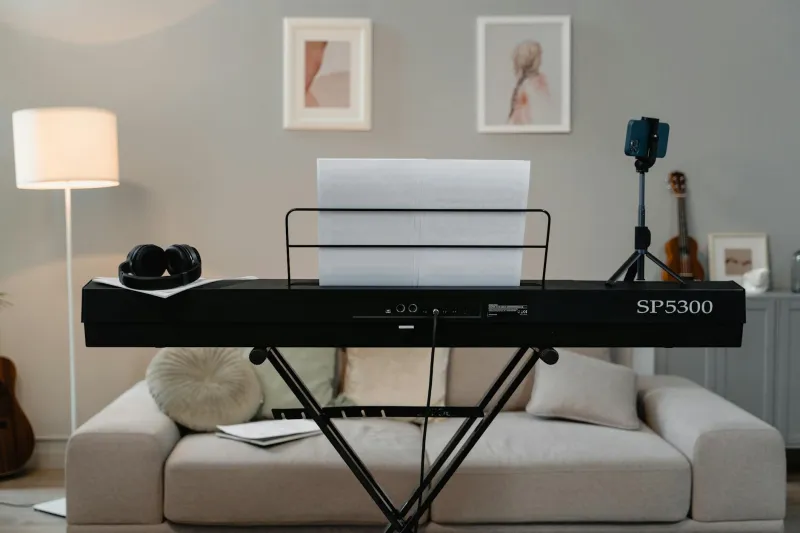
To enter these spaces is to conduct a form of domestic archaeology. Each abandoned project tells a story not just of failure, but of hope. The dusty guitar in the corner speaks to Tuesday evenings that never materialised into practice sessions. The sewing machine, still boxed, represents a vision of sustainable living that foundered on the reality of fast fashion's convenience.
Dr Emma Richardson, who studies domestic space at the University of Cambridge, argues that these rooms serve a crucial psychological function: "They're not failures—they're possibilities held in suspension. The mere existence of the space maintains the fiction that transformation remains achievable."
 Photo: University of Cambridge, via kep.cdn.index.hu
This suspension of possibility explains why these rooms resist practical reorganisation. To clear out the art supplies would be to admit defeat. To sell the unused equipment would be to foreclose future selves. Instead, these objects accumulate dust and dignity in equal measure, patient witnesses to our capacity for self-deception.
The IKEA Optimism Complex
The furniture giant IKEA has become an unwitting enabler of this domestic psychology. Their spare room displays—those perfectly curated vignettes of creative productivity—sell not furniture but fantasy. The Scandinavian aesthetic promises that the right desk configuration will unlock dormant creativity, that proper storage solutions will facilitate meaningful hobbies.
Britain's spare rooms are consequently filled with IKEA's optimistic geometry: modular shelving systems that accommodate non-existent book collections, ergonomic desk chairs for writing careers that never materialised, craft storage solutions for projects that remain perpetually 'in progress'. The flat-pack aesthetic has become the visual language of deferred ambition.
The Gender Politics of Creative Space
There's a distinctly gendered dimension to Britain's spare room economy. Women's spaces tend toward craft and creativity—sewing rooms, art studios, yoga spaces. Men's rooms skew technical—recording studios, workshops, gaming setups. These gendered patterns reflect broader social expectations about appropriate forms of self-expression and leisure.
But they also reveal something more poignant: the ways domestic space becomes a negotiation between public obligations and private desires. For many women, the spare room craft studio represents the only space in the house that belongs entirely to them—even if it's used primarily for storage.
The Professional Amateur
Perhaps most tellingly, these spaces often contain equipment that far exceeds the skill level of their owners. Semi-professional cameras for photography courses never taken. High-end mixing boards for podcasts never recorded. Expensive easels for paintings never started.
This over-equipment serves a psychological function: it maintains the illusion that lack of progress stems from inadequate tools rather than insufficient commitment. The professional-grade equipment suggests seriousness of intent, even when that intent remains theoretical.
"There's something tragic about a £3,000 guitar that's never been properly tuned," observes cultural critic Michael Barnes. "It represents not just wasted money, but wasted possibility."
The Economics of Aspiration
The spare room economy represents a significant if overlooked sector of British consumer spending. Retailers report that hobby-related purchases spike during periods of personal transition—new jobs, relationships, relocations. The spare room becomes a repository for these transitional identities, accumulating the material culture of selves we're perpetually about to become.
This spending serves an important psychological function. The act of purchasing equipment creates the illusion of progress without requiring actual effort. Buying the yoga mat feels like taking up yoga. Acquiring the easel approximates becoming an artist. Consumer capitalism has learned to monetise aspiration itself.
Digital Dreams, Analogue Spaces
Interestingly, many spare room projects represent a flight toward analogue activities in an increasingly digital world. Pottery wheels, woodworking benches, and darkroom equipment speak to a hunger for tactile creativity that screens cannot satisfy.
These spaces become refuges from the digital overwhelm of contemporary life, even when they remain largely unused. The mere possibility of hands-on creation provides psychological comfort in an age of constant connectivity.
The Comfort of Incompletion
Perhaps the most fascinating aspect of Britain's spare room psychology is how comfortable we've become with incompletion. Unlike previous generations, who might have felt shame about abandoned projects, contemporary Britons seem to find comfort in the ongoing possibility these spaces represent.
The half-finished novel on the laptop. The partially completed jigsaw puzzle. The beginnings of a watercolour series. These incomplete projects don't represent failure so much as potential energy—dreams held in suspension, ready to be activated when circumstances allow.
The Future of Domestic Possibility
As Britain gradually returns to offices and normal routines, many of these pandemic-era spare room transformations face an uncertain future. Some will be quietly dismantled, their equipment migrating to charity shops and online marketplaces. Others will persist as monuments to lockdown ambition, gathering dust but retaining dignity.
But perhaps the most honest response to these spaces is neither shame nor clearance, but acceptance. They represent something fundamentally human: our capacity to imagine ourselves differently, to believe in transformation, to maintain hope in the face of evidence.
In the end, Britain's spare rooms serve as domestic museums of possibility—spaces that honour not who we are, but who we might yet become. That the transformation rarely occurs seems less important than the fact that we continue to believe it could. In a culture increasingly focused on productivity and achievement, perhaps there's something radical about maintaining spaces devoted purely to potential.
The spare room, in all its cluttered optimism, represents a peculiarly British form of faith: the belief that we are always just one weekend away from becoming the people we've always meant to be.