The Lost Intimacy of Ink: Why Britain Stopped Writing Letters
The Stationery Shop Paradox
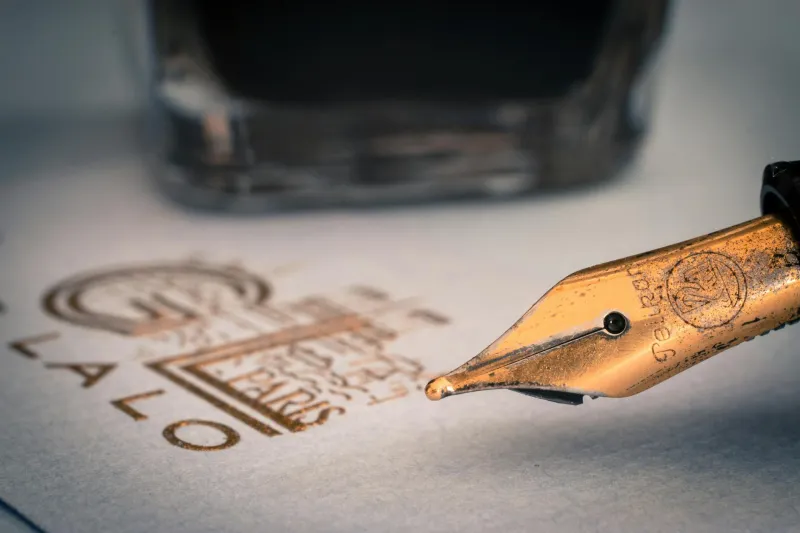
Browse any British high street today, and you'll find them tucked between coffee shops and phone repair centres: exquisite stationery boutiques selling fountain pens that cost more than most people's monthly mobile phone bill, leather-bound notebooks that will never be filled, and writing paper so beautiful it seems almost criminal to sully it with actual words.
These shops represent one of modern Britain's most curious contradictions. They're shrines to a practice we've almost entirely abandoned, tended by customers who collect the tools of letter-writing whilst having no intention of actually writing letters. We've turned correspondence into a museum piece—something to be admired, purchased, and displayed, but never actually practiced.
The Archaeology of Intention
To understand what we've lost, consider the physical archaeology of letter-writing: the selection of paper, the choice of pen, the careful formation of thoughts before committing them to permanence. A handwritten letter was never just communication—it was a small performance of consideration, a demonstration that the recipient was worth the investment of time, thought, and physical effort.
This process imposed a particular rhythm on human connection. Letters demanded patience—from the writer, who had to think before writing, and from the recipient, who had to wait for delivery. They required commitment—once posted, words couldn't be unsent, edited, or deleted. They created anticipation—the peculiar pleasure of recognising handwriting on an envelope, the ritual of opening and unfolding.
The WhatsApp Generation
Today's young adults inhabit a world of instant, editable, deletable communication. They've never experienced the weight of choosing words carefully because revision was impossible. They've never felt the particular intimacy of recognising someone's handwriting, never experienced the delayed gratification of postal correspondence.
Yet paradoxically, this generation often expresses the deepest nostalgia for letter-writing. They purchase vintage stationery, follow calligraphy accounts on Instagram, and speak wistfully about the 'lost art' of correspondence—whilst conducting their actual relationships through platforms designed for immediate, disposable interaction.
The Thinking Behind the Ink
What made letter-writing culturally significant wasn't the medium but the mindset it required. Letters demanded a particular form of mental organisation—the ability to structure thoughts coherently, to anticipate questions and responses, to create a complete narrative arc within a single communication. They required what we might call 'delayed thinking'—the patience to develop ideas fully before expressing them.
This cognitive discipline has largely disappeared from our communicative practices. Modern digital communication prioritises speed over depth, reaction over reflection. We've gained efficiency but lost the particular form of intimacy that comes from sustained, considered expression.
The Performance of Permanence
Handwritten letters also created a unique form of material intimacy. They were physical objects that carried traces of their creator—the pressure of the pen, the slight tremor of emotion, the careful corrections that revealed the writer's thought process. Recipients could hold these objects, return to them repeatedly, discover new meanings in familiar words.
This physicality created a different relationship with language itself. Words written by hand felt more substantial, more consequential than their digital equivalents. The effort required to produce them made both writer and reader more attentive to their weight and meaning.
The Curation of Emotion
Perhaps most significantly, letters required emotional curation in ways that instant messaging doesn't. Writers had to decide which feelings deserved the effort of documentation, which thoughts warranved the formality of postal delivery. This selection process—determining what was worth writing down—created a natural hierarchy of emotional significance.
Today's constant connectivity eliminates this curation. Every passing thought, momentary irritation, or fleeting affection can be immediately transmitted. We've gained emotional immediacy but lost the discipline of determining which feelings deserve sustained expression.
The Commercial Nostalgia Industry
The stationery revival represents a peculiar form of consumer nostalgia—we're purchasing the aesthetics of a practice we have no intention of resuming. These beautiful notebooks and artisanal pens serve as talismans of a more considered, more intentional form of communication that we admire but cannot practically accommodate.
This commodification of letter-writing culture allows us to feel connected to its values—thoughtfulness, permanence, care—without accepting its limitations. We want the romance of correspondence without its inconvenience, the aesthetics of handwriting without its time investment.
What Cannot Be Recovered
The death of letter-writing represents more than technological obsolescence—it marks the end of a particular form of human patience. We've lost not just a communication method but an entire approach to relationship-building based on delayed gratification, careful thought, and material investment.
While we cannot and should not return to purely postal communication, we might ask what elements of letter-writing culture deserve preservation. Perhaps it's the practice of thinking before speaking, of investing effort in our expressions, of creating communications that deserve to be kept and revisited.
The fountain pens gathering dust in our beautiful stationery shops aren't just writing instruments—they're monuments to a form of human connection that prioritised depth over speed, consideration over convenience, and permanence over efficiency. Whether we can rediscover these values in our digital age remains an open question.