Services Rendered: How the Motorway Stop Became Britain's Most Democratic Room

Photo by Photo by Raymond Okoro on Unsplash on Unsplash
Services Rendered: How the Motorway Stop Became Britain's Most Democratic Room
The Watford Gap has a reputation. Situated on the M1 at the point where, depending on your cultural geography, the North either begins or the South ends, it has been a reliable source of metropolitan condescension since it opened in 1959. To be seen eating at the Watford Gap services was, for a considerable stretch of the late twentieth century, to announce something unfortunate about your standards. The food was bad. The coffee was worse. The lighting had been calibrated, one suspected, specifically to make human beings look as though they were recovering from minor surgery.
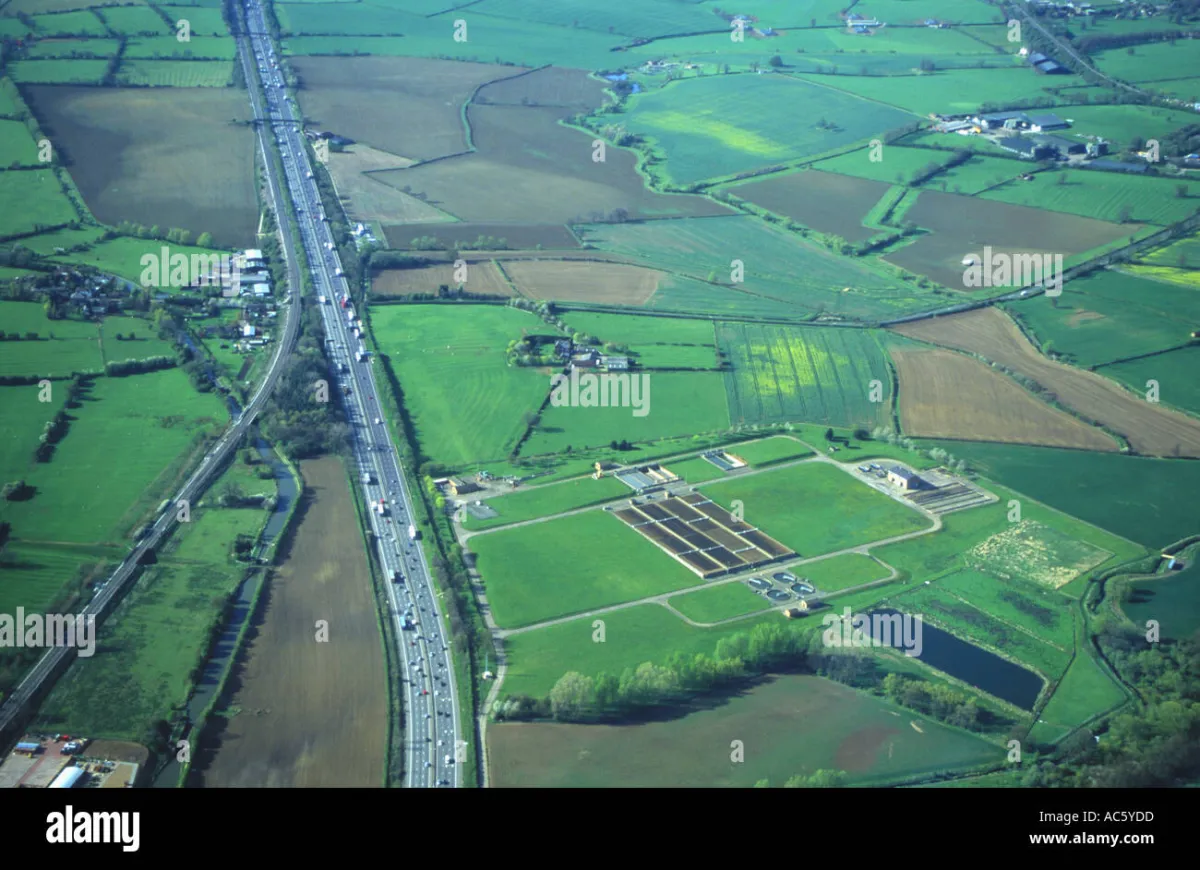 Photo: Watford Gap, via c8.alamy.com
And yet here we are, in the third decade of the twenty-first century, having a rather different conversation about Britain's motorway services. The coffee is now, in many cases, genuinely good. Several sites have introduced fresh pasta, artisan bakeries, and meal options that would not disgrace a mid-range high street restaurant. A small number have become, in the peculiar contemporary idiom, 'destinations' — places that travellers plan to stop at rather than reluctantly submit to.
More interesting than the improved coffee, however, is what the motorway service station has become in social terms. It may, without too much hyperbole, be described as one of the last genuinely classless spaces in Britain.
The Architecture of Equality
The genius of the motorway services — and it is a peculiar, accidental genius — lies in its structural indifference to social distinction. You cannot, in any meaningful sense, upgrade your experience of a service station. There is no VIP entrance, no members' area, no preferential queue for those willing to pay a premium. The car park charges the same rate regardless of what is parked in it. The Costa Express dispenses identical flat whites to lorry drivers and lawyers.
This democratic quality is partly a function of geography. The motorway, by definition, draws from the full width of British society. On any given stretch of the M6 on a Friday afternoon, you will find articulated lorries alongside family saloons alongside luxury SUVs alongside the kind of ageing hatchbacks that suggest their occupants are operating on a very tight budget indeed. All of these drivers need, eventually, to stop. And when they stop, they stop at the same place.
The service station, unlike almost every other commercial space in contemporary Britain, has not yet found a way to sort its customers by income. There are no boutique alternatives for those who find the standard offering insufficiently curated. The services are the services. You are welcome, or you are not, but the terms are the same for everyone.
The Upgrade Nobody Ordered
The rehabilitation of the motorway services as a cultural space has been gradual and, in many respects, unplanned. It began, as so many British transformations do, with coffee. The arrival of Costa, then Starbucks, then various independent operators, changed the fundamental proposition of the service station stop. Previously, the stop was a necessary evil — a concession to biological reality, endured as briefly as possible. The availability of decent coffee transformed it into something resembling a voluntary pause.
From coffee, the improvement spread. Operators including Moto, Welcome Break, and Extra discovered, apparently to their own surprise, that customers were willing to spend more time and money in their facilities if those facilities offered something worth stopping for. Fresh food arrived. Seating areas were redesigned to feel less like airport departure lounges and more like somewhere a person might choose to sit. Some locations introduced play areas, walking trails, and — in a development that would have seemed satirical to anyone visiting in 1987 — electric vehicle charging stations around which small communities of patient drivers have begun to form.
The result is a space that has outpaced its own reputation. Britain's collective image of the motorway services remains fixed somewhere around 1994 — grim, expensive, unavoidable. The reality, at many locations, is considerably more nuanced.
A Portrait of Britain in Transit
Spend an hour in a busy motorway services on a weekend and you will receive an education in contemporary British society that no think-tank report can quite replicate. The space is, in the most literal sense, a cross-section: a random sample of the country in motion, stripped of the social sorting mechanisms that normally keep different classes and communities in comfortable separation.
Here is the retired couple in matching fleeces, eating jacket potatoes with studied care. Here is the young family, slightly frantic, negotiating the competing demands of a toddler who wants a Greggs sausage roll and a parent who has decided, today, to try the poke bowl. Here are two lorry drivers in high-visibility jackets, deep in a conversation that has the easy familiarity of a years-long professional acquaintance. Here is the management consultant, laptop open on a corner table, eating what is technically a working lunch. Here is the group of teenagers on a sixth-form trip, treating the service station with the anarchic enthusiasm of people encountering unsupervised freedom for the first time.
These people would not, in the ordinary geography of British life, occupy the same room. They live in different postcodes, shop in different supermarkets, eat in different restaurants, and send their children to different schools. The motorway services, with its brutal democratic logic, has assembled them anyway.
The Honest Mirror
There is a theory of public space, advanced by various urban thinkers over the past half-century, which holds that a society can be measured by the quality and character of its genuinely shared spaces — the places where all citizens, regardless of income or status, encounter one another on equal terms. By this measure, contemporary Britain is not doing especially well. Our high streets have been stratified by rental values. Our parks are increasingly differentiated by postcode. Our schools sort children by ability, faith, and parental income. Our hospitals are supplemented, for those who can afford it, by private facilities that remove the better-off from the common waiting room.
Against this backdrop, the motorway service station stands out as something almost anomalous: a space that has not yet been successfully colonised by the logic of social stratification. It is imperfect, obviously. The food is still overpriced relative to what you would pay on a high street. The facilities vary wildly between operators and locations. And the very fact of car ownership introduces its own demographic sorting before anyone has set foot inside.
But within its limitations, the services offers something increasingly rare: the experience of sharing a space, a meal, and a moment of transit with people whose lives bear no particular resemblance to your own. In a country that has grown steadily more segregated by class, geography, and aspiration, that is not nothing.
Destination Unknown
There is something faintly melancholy in the discovery that one of Britain's most democratic spaces is also, by definition, a place that nobody intends to stay. The service station is, structurally, a space of passage — a pause between places, not a place in itself. Its democracy is accidental and temporary. In an hour, the retired couple will return to their village. The management consultant will reach their hotel. The lorry driver will rejoin the motorway. The teenagers will arrive at their destination and forget the stop entirely.
And yet, for that hour, something genuine occurred. Strangers ate in proximity. Children ran between tables without social self-consciousness. The ordinary hierarchies of British life were, briefly and imperfectly, suspended.
Perhaps that is what a democratic space has always been: not a utopia, but a pause. Not a destination, but a reminder, encountered somewhere between where you started and where you are going, that the country you share is considerably larger and more various than the corner of it you normally inhabit. The fluorescent lights of the Watford Gap, it turns out, illuminate more than the car park.