The Great British Tooth Revolution: When Smiles Became Status Symbols
The End of the British Smile
For decades, the British relationship with dental imperfection was a source of both international mockery and peculiar national pride. Our crooked incisors and tea-stained molars were as much a part of our identity as queuing and complaining about the weather. They were democratically distributed across all social strata—a visual reminder that some aspects of human variation couldn't be purchased or inherited.
That era is ending with remarkable speed. Walk through any British high street today, and you'll notice something subtly different about the faces around you. The smiles are straighter, whiter, more uniform. What was once a charmingly haphazard collection of dental individuality is being systematically replaced by rows of ceramic perfection.
The Veneer Revolution
The transformation isn't happening in Harley Street consulting rooms—it's occurring in dental practices from Grimsby to Guildford. Cosmetic dentistry, once the preserve of celebrities and Americans, has become accessible to anyone with a credit card and sufficient social anxiety about their appearance. The rise of payment plans, social media pressure, and 'smile makeover' marketing has democratised dental perfection in ways that would have been unimaginable a generation ago.
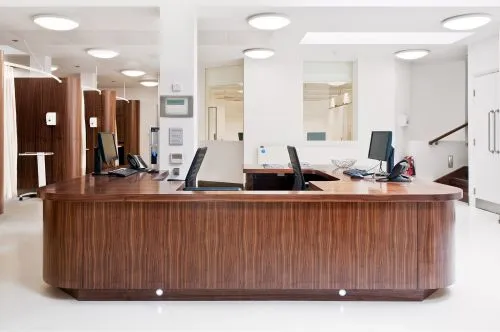 Photo: Harley Street, via www.st-arch.co.uk
This shift represents more than mere vanity. In an era where traditional class markers have become increasingly unreliable—where accent coaching can modify speech, fast fashion can mimic luxury, and postcodes can be aspirational rather than actual—teeth have emerged as one of the few remaining authentic indicators of background and aspiration.
The New Postcode in Your Mouth
Consider the coded language that now surrounds British dental work. 'Investment in yourself' has replaced 'cosmetic procedure.' 'Confidence boost' substitutes for 'status anxiety.' The industry has successfully reframed what is essentially aesthetic modification as psychological necessity, creating a market where not having perfect teeth feels like a form of self-neglect.
This reframing has profound social implications. Perfect teeth now signal not just wealth, but the kind of forward-thinking self-investment that middle-class Britain increasingly values. They suggest someone who 'takes care of themselves,' who 'invests in their future,' who understands that appearance matters in professional advancement.
The Instagram Effect
Social media has accelerated this transformation exponentially. Every selfie becomes a dental advertisement, every video call a potential source of smile anxiety. The phenomenon of 'Instagram teeth'—unnaturally white, uniformly shaped veneers that photograph beautifully but look artificial in person—has become the aesthetic standard against which normal teeth are measured and found wanting.
Younger Britons, growing up in this visually mediated environment, increasingly view dental imperfection not as character but as correctable deficiency. The gap-toothed grin that might once have been considered charming now feels like a social disadvantage, something to be fixed rather than celebrated.
What We Lose in Translation
Yet something significant disappears when we edit out these imperfections. The slight overlap of front teeth that made someone's smile memorable. The tiny gap that caught light in a particular way. The subtle asymmetry that gave character to a face. These features weren't flaws—they were forms of visual punctuation that made individuals recognisable and distinctive.
More troubling is the homogenisation effect. As more Britons opt for similar dental treatments, our faces begin to converge around a narrow aesthetic ideal. The diversity of human appearance—once a source of national character—becomes increasingly standardised according to Instagram-friendly specifications.
The Anxiety Economy
The cosmetic dentistry boom has created what we might call an 'anxiety economy'—a market that profits from manufacturing insecurities about previously accepted aspects of human appearance. Dental practices now employ marketing strategies borrowed from luxury goods, selling not just treatments but lifestyle transformations.
This economy particularly targets those experiencing social mobility anxiety—people who feel their background might be betrayed by their appearance. Perfect teeth become a form of social insurance, a way of ensuring that one's mouth doesn't accidentally reveal one's origins or economic history.
The Democratic Smile
There's an irony in this development. In our attempt to democratise dental perfection, we've accidentally created a new form of inequality. Those who can afford cosmetic dentistry join an increasingly exclusive club of the perfectly toothed, while those who cannot—or choose not to—find themselves marked as belonging to an earlier, less polished era.
The British smile was never about perfection—it was about authenticity, character, and the acceptance of human imperfection as part of individual charm. As we rush to edit out these imperfections, we risk losing something essentially British: the ability to find beauty in the unpolished, character in the imperfect, and humanity in the flawed.
Perhaps the real question isn't whether we can afford perfect teeth, but whether we can afford to lose the imperfect smiles that once made us recognisably, charmingly, democratically ourselves.