Against the Everything Machine: Britain's Quiet Rebellion Through Single-Purpose Objects
The Tyranny of Convergence
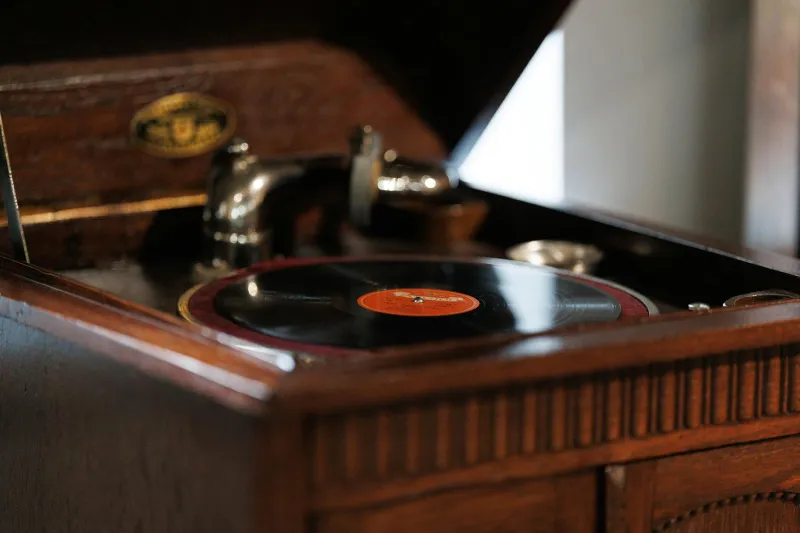
In the corner of Sarah Mitchell's Islington flat stands a 1970s radiogram, its walnut veneer gleaming under afternoon light streaming through Georgian windows. The device serves a single purpose: playing vinyl records. No Bluetooth connectivity, no streaming capabilities, no notifications. Just music, emerging from speakers with the warm imperfection that digital purists spend fortunes trying to recreate.
Mitchell, a 34-year-old marketing executive, purchased the radiogram six months ago from a dealer in Camden Market. "I realised I hadn't properly listened to music in years," she explains, running her fingers along the device's analogue dials. "Everything was background noise, competing with messages and emails and whatever else my phone wanted to tell me."
 Photo: Camden Market, via c8.alamy.com
Her experience reflects a broader cultural phenomenon quietly reshaping British households. Across the country, a generation raised on digital convergence is deliberately seeking out objects that refuse to multitask. Record players, film cameras, mechanical watches, fountain pens—the defiantly analogue is experiencing an unlikely renaissance.
The Philosophy of Doing Less
This movement represents more than mere nostalgia. In an era where our smartphones promise to be camera, stereo, television, typewriter, and telegraph rolled into one pocket-sized marvel, the appeal of single-purpose objects speaks to something deeper: a growing exhaustion with the cognitive burden of infinite choice.
Dr. James Crawford, a technology philosopher at King's College London, argues that our embrace of convergent devices has come at an unexpected cost. "When everything does everything, nothing feels particularly meaningful," he observes. "The radiogram demands you sit down, select a record, and listen. That ritualistic aspect—what we might call the friction of use—creates a different relationship with the activity itself."
 Photo: King's College London, via britishside-edu.com
This friction, once considered a design flaw to be eliminated, is increasingly viewed as a feature. The deliberate inconvenience of loading film into a camera, winding a mechanical watch, or threading paper into a typewriter creates what enthusiasts describe as mindful engagement—a forced slowness that smartphones, with their instant everything, have trained us to forget.
The Craft of Limitation
Visit any of London's growing number of specialist shops—from Ryman's fountain pen section to the vinyl emporiums of Soho—and you'll encounter a curious demographic: young professionals spending considerable sums on what their parents might consider obsolete technology. These aren't Luddites rejecting progress, but rather digital natives who understand intimately what we've traded for convenience.
Tom Hartley runs a small shop in Brighton specialising in refurbished typewriters. His customers, he notes, are predominantly under 40. "They're not buying these machines to be difficult," he explains, adjusting the ribbon on a 1960s Olivetti. "They're buying them because when you sit down at a typewriter, you're only writing. No emails, no social media, no notifications. Just the words and the machine."
The appeal extends beyond individual psychology to questions of identity and self-expression. In an age of algorithmic recommendation and personalised feeds, choosing to engage with objects that offer no customisation becomes its own form of rebellion. The radiogram plays records at the speed they were designed for, neither faster nor slower. The mechanical watch tells time without suggesting you check your step count.
The Economics of Intentionality
This cultural shift has created unexpected economic opportunities. Repair cafes, once the domain of environmental activists, now attract customers seeking to maintain their deliberately limited devices. Specialist shops selling film, vinyl, and vintage electronics report steady growth, even as their digital equivalents become ever more accessible and affordable.
Yet the movement raises uncomfortable questions about privilege and accessibility. A decent turntable costs significantly more than a Spotify subscription; film photography requires both financial investment and geographic access to processing facilities increasingly concentrated in urban areas. The luxury of choosing limitation, critics argue, remains largely available to those with sufficient means to opt out of digital efficiency.
Beyond Digital Detox
What distinguishes this phenomenon from the familiar narrative of digital detox is its specificity. These consumers aren't rejecting technology wholesale but rather making surgical choices about which aspects of modern life to embrace and which to resist. They might stream television while playing vinyl records, or edit photographs on laptops while shooting them on film.
This selective engagement suggests a maturing relationship with digital technology—one that moves beyond the binary of acceptance or rejection toward something more nuanced. The radiogram owner isn't necessarily anti-smartphone; they're simply insisting that some experiences deserve dedicated time and space.
The Sound of Resistance
As Britain grapples with questions of digital sovereignty, data privacy, and technological dependence, the quiet rebellion of single-purpose objects offers an alternative model. Rather than grand gestures of rejection, it proposes small acts of intentionality—choosing the deliberate over the convenient, the specific over the universal.
Whether this represents genuine cultural change or merely the luxury preferences of a privileged minority remains to be seen. But in an age where everything promises to do everything, there's something quietly radical about insisting that some things should do just one thing, and do it beautifully.
The radiogram plays on, indifferent to notifications, immune to updates, offering its simple gift: music, uninterrupted, in a world that has forgotten how to listen.